
Kian Liew heads up the Global ID & Technical Services department for The Ascott Limited; he has been working for the group for over 11 years. He believes in the harmony of geometry, linearity, layering, and textures to create beautiful spaces. He is meticulously disciplined in observing the “grammar of interior design”, whilst also being mindful of the coherence of occasional objects and accents. Kian shares his Design journey with us and speaks about the new co-living brand “LYF” by Ascott.
Do you mind sharing your professional story? How did you start working in Design for the Hospitality Industry?
I never actually thought of becoming a designer. I started out in Business Management. One of my pastimes was visiting apartment show suites. Seeing how different elements came together to form elegant compositions sated an innate curiosity in design, while also filling me with a desire to engage in my own design process instead of being a mere observer. I decided to take the plunge by putting together a portfolio and applying to the Chelsea College of Arts in London.
After graduating, I eventually found myself involved in Hospitality design with The Ascott. It felt like a natural fit because designing for hospitality projects requires a holistic approach, something that attracted me to design in the first place. Things have come full circle, and today, I get to design apartments that are as aesthetically pleasing as they are comfortable for our guests. I particularly enjoy how the finer touches, from the selection of artwork to the uniform design, further enhance the guest experience.
What are your main responsibilities as VP, Head of Global ID & Technical Services for Ascott Limited?
I currently wear two hats. As head of the technical services team, I oversee a team of engineers and interior designers. Together with the architecture team, we are custodians of several brands under The Ascott Limited umbrella. In addition to establishing design guidelines and auditing the designs of different projects, we collaborate with designers to identify and advocate innovations in materials, technology, and sustainable construction methods.
At the same time, my team also provides Interior Design services for selected projects. Offering ID services empowers us to define the design narrative and strengthen our brand identity. This role also requires my team to keep abreast with design trends, novel materials and construction methods, enabling us to elevate the quality of our full suite of properties regardless.
The Ascott Group has recently opened two new properties under the “Lyf by Ascott” brands; a new co-living concept. Can you please share more about these new properties?
In terms of Architecture and Interior Design, what were the key challenges of designing a co-living space/building?
At its core, the LYF brand is quintessentially millennial; designed and managed by millennials for both millennials and the millennial-minded. We combine creatively designed living spaces with curated social programmes to create a conducive environment for collaboration. It is the physical embodiment of the values of this generation: connected, confident, creative and collaborative.
LYF Funan, the largest co-living property in Southeast Asia, was the first of our current portfolio of 14 LYF properties (both in operation and under development), with over 2,700 units across Australia, Southeast Asia, China and Japan.
The COVID-19 pandemic presented a fresh set of challenges in designing co-living spaces. For our LYF properties, connection, collaboration and community are extremely important. We’ve had to bring the design process back to the drawing board, distilling it down to fundamental design principles, seeing how we can achieve objectives such as a sense of community without compromising safety.
What are you working on at the moment, and do you have any upcoming projects or collaborations that you are able to tell us about?
This is an exciting year for us! We will be opening lyf Tenjin Fukuoka, which will be our first operational LYF in North Asia. Closer to home, we are also working on Citadines Connect Rochester Singapore, bringing the Connect brand hotels to Singapore for the first time.
Which Architect or Interior Designer influences your work or your work habits?
While I do admire the works of several Architects and Interior Designers, I am primarily inspired by projects driven by robust narratives as opposed to arbitrary notions of aesthetics. I believe that design is just another form of storytelling, using material and space instead of words. A good design is one that responds to the constraints of its environment in an imaginative and purposeful manner.
Do you mind sharing what are your passions outside of the design world?
I am a huge foodie. Fortunately (or unfortunately) for my friends, I don’t just love to eat. I love to experiment and create as well. I think this is something that has carried over from my design process. Just as a novel combination of materials, textures or geometries might be just what it takes to give our next project that Je ne sais quoi, a seemingly unorthodox blend of ingredients could elevate a dish. These experiments don’t always go as planned, but we never know if we never try.
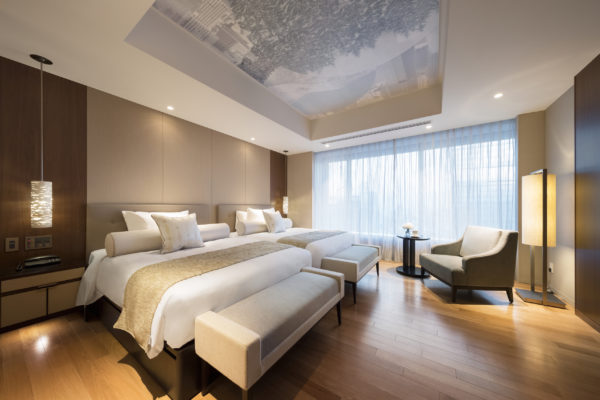
Ascott Marunouchi Tokyo – Bedroom
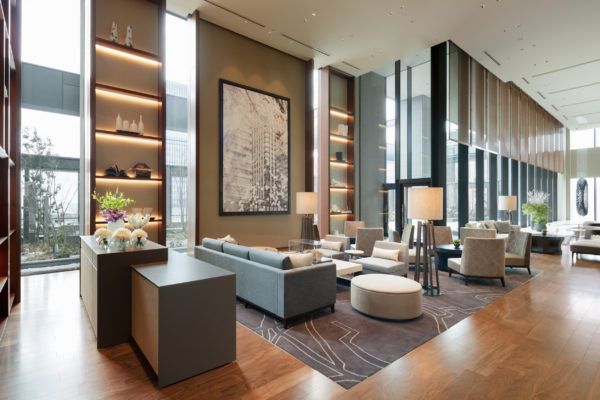
Ascott Marunouchi Tokyo – Public Space
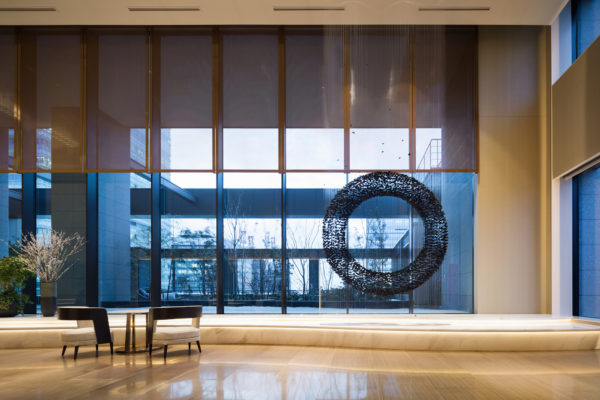
Ascott Marunouchi Tokyo – Public Space
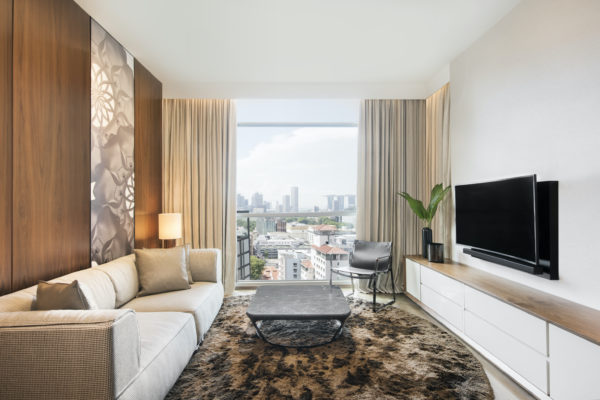
Ascott Orchard Singapore – Penthouse
Ascott Orchard Singapore – Penthouse
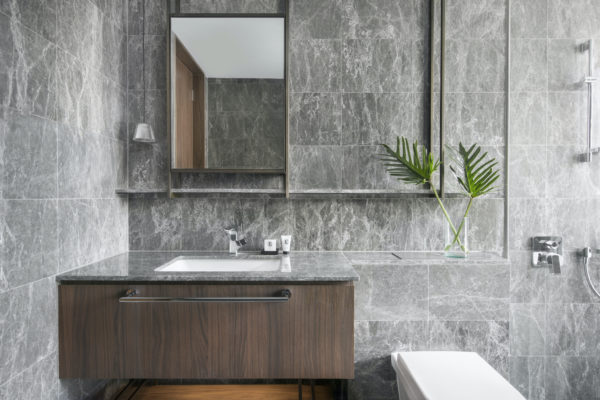
Ascott Orchard Singapore – Penthouse
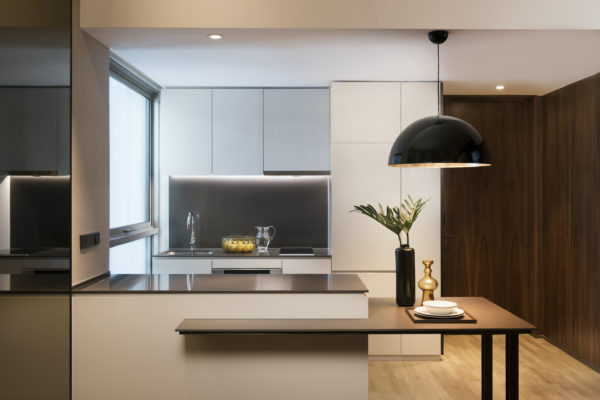
Stanislas Helou has joined the LIV Hospitality Design Awards Jury panel, bringing years of experience in the Luxury Rental Market. Working previously for “Luxury Retreats” and “AirBnB”, Stanislas is now the Head of Supply Europe for OneFineStay, acquired by Accor Group.
Could you tell us a little about yourself? Where are you from?
Citizen of the world! I’m French with Lebanese & Polish roots and have lived in 8 different countries throughout my life. Thanks to this I speak 5 languages and understand a variety of cultures.
What inspired your love for Design and why choosing the Luxury Rental/House/villa… industry?
I studied Hotel Management at Glion Institute of Higher Education in Switzerland (top two best hotel management schools in the world) so it gave the base needed to work in different management positions in luxury hotels in New York City, Crete, London & Barcelona. Entering the world of luxury villa rentals was completely new to me six years ago but if you look at the big picture, it’s a parallel world where my experience, leadership skills and love for luxury personalized service would fit in perfectly.
You have recently joined OneFineStay, a platform dedicated to Luxury Short term rental part of Accor Group as Head of Supply. What are your main responsibilities?
My two main responsibilities are handpicking the correct destinations in Europe where we’d like to rent luxury villas to our distinguished guests as well as striking partnership deals with villa owners to market their beautiful properties onto our platform.
What makes a “great” luxury rental property? What are the key elements or Key criteria you are looking for?
First of all, the property has to be luxurious in and out in regard to its destination. We cannot look at a villa in Miami the same way you’d look at a villa in Tuscany. We have a 250+ point inspection report that helps us handpick the properties that fit our portfolio and that we know our guests will love. An overview of the design of the villa is important. Is it well decorated? Is the garden well taken care of? What’s the bathroom vs bedroom ratio? And then we look into the tiny details such as making sure there are enough red wine glasses for the entire number of guests that can fit in the property or if there are quality pool towels. Our guests can trust us completely.
In terms of Interior Design/ Architecture, have you noticed any particular recent trends for the Luxury Rental market?
Not so much as a trend, but I see that owners take pride in either decorating their beautiful villas themselves or select an interior designer who understands their taste and that can decorate their properties the way they like. Each villa has its own ‘’wow’’ thing. It could be a staircase designed by a famous architect, a piece of art, a large infinity pool with a glass bottom, or an indoor booking ring.
Do you mind sharing what are your passions outside of the design world?
Education is something I hold dear to me. I’ve been teaching different classes to Bachelor and Masters students in hotel management schools in Switzerland and Spain for over four years now. Being part of the education of the leaders of tomorrow is a special and honorable feeling.
Cristiano Pistis joined NH Hotel Group as Senior Director in 2016, managing the Italian team of Project, Construction, Maintenance & Engineering based in Milan. Cristiano managed over 50 projects in the last years, he is sharing his experience and challenges to work in Design for Hospitality.
Can you tell us a bit about your background? Where are you from?
I was born in Sardinia (Italy) a small and beautiful island in the middle of the Mediterranean Sea.
After high school, I moved to Turin to study Architecture at the Polytechnic. This University gave me a strong background in Architecture without losing a special focus on technology and the relationship between conceptualization and execution. Architecture, but in general everything related to construction or transformation, has always been a big passion of mine.
My father worked in the same industry and I still remember myself, when I was 10 years old, lost in new empty buildings on construction, curious about the coordination of the works and the different professionals involved. It was quite dangerous, but it was there that I started learning.
What has inspired you to work in the Design field?
I have always been a strong dreamer with a marked attitude to building. The two things mixed made me an early designer. The idea that through the design process we could make things better is something that, always, excites me and keeps me awake and young-brained.
Finally, I truly believe that design can be, not always but often, one of the disciplines that can improve life making it better and giving meaning to the space around us.
What does your current position as Senior Director, Building Engineering & Maintenance – Southern Europe for NH group involve?
It is a journey across different challenges and adventures on different levels. My department is responsible for all the Refurbishments and the New Openings in Italy. Even if the basic unit of the hotels is the room, with almost similar needs and services to be provided, each project is different from the other.
Essentially, we act as a Project Management Office coordinating all the phases starting from the preliminary estimations to the closing of the works and the handover. We use external designers for almost all the projects and with them, we develop technical designs to be awarded and then executed. We are responsible for the entire process in full collaboration with Hotels and the help of the GMs and their teams.
One of the important things is to work as a unique team with the other departments to deeply understand the needs and the characteristics of each hotel and for each project. A great briefing means a strong project. This is where we start.
Can you tell us more about the upcoming properties for NH Group in Southern Europe?
Even during this pandemic crisis, there are several interesting new openings that are coming in the next years. We are working on new Hotels in Milan, Rome, Cagliari, Venice and Murano and the surprises are not yet finished.
If you had to choose just one of your projects, which project would it be and why?
Wow…Difficult question! The projects we developed during the last 5 years are like kids. I love them all. The most challenging is also the most beloved.
For sure, I would list here the new openings in France, the NHOW Marseille, the NH Collection Marseille, and the NH Toulouse. But then all the refurbishment and new openings we managed in Italy. Really a difficult choice. I remember meetings, site inspection, people I met, flights, sandwiches, and the brand-new room’s peculiar smell.
Although I also remember mistakes that must not be repeated and details that I wanted to do differently.
From each project, I learned new lessons.
What do you feel is the most challenging part of working in Hospitality Design today?
Even if the times are harder than ever and we are facing a never experienced situation the question for designers is always the same. How to interpret the future ways to use the spaces and the new tendency that will be actual in the next five or 10 years at least? How to conceptualize a project which can last more than one season? This is always the main challenge, and I’m not only talking about aesthetical topics but also about durability and operational needs among the product/hotel life.
Outside of the Design World, do you mind sharing your other passions?
Very standard ones…Technology, sea, music, etc. In the private life, I am a flaneur, curious about everything.
Last, do you have any tips for aspiring Hospitality Architects/Interior Designers?
First, to be filled with a lot of passion. Then to study a lot and observe how people interact with and/or in public spaces. Finally, even if it can be quite expensive, to have life experiences, having late drinks in bars, dance all night long, work in lobbies, sleep in as many different hotels and rooms as possible, take notes of any tiny, weird detail.
In few words…. Kiss the future
Casa del Pingone – Project by F.De Giuli, C.Pistis, P.Cobianchi
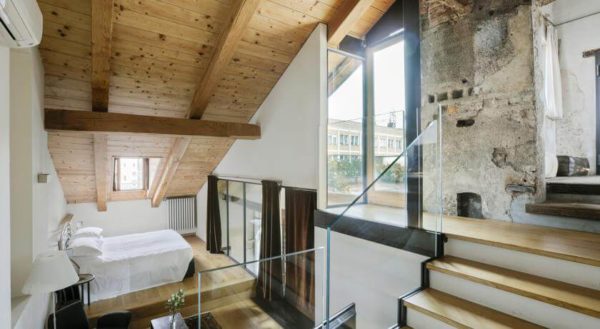
Casa del Pingone – Project by F.De Giuli, C.Pistis, P.Cobianchi
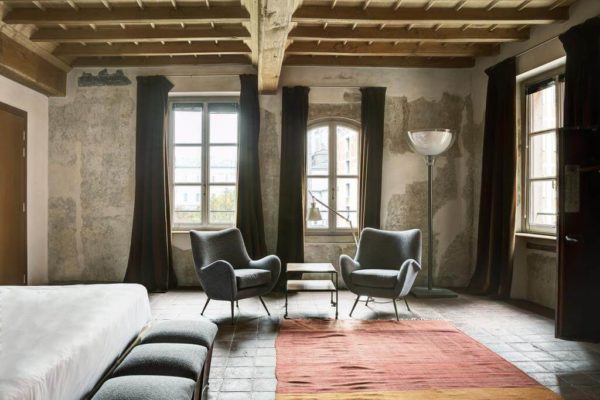
NH Collection Carlina – Project by F.De Giuli, F.Fusari, D.Dutto, C.Pistis
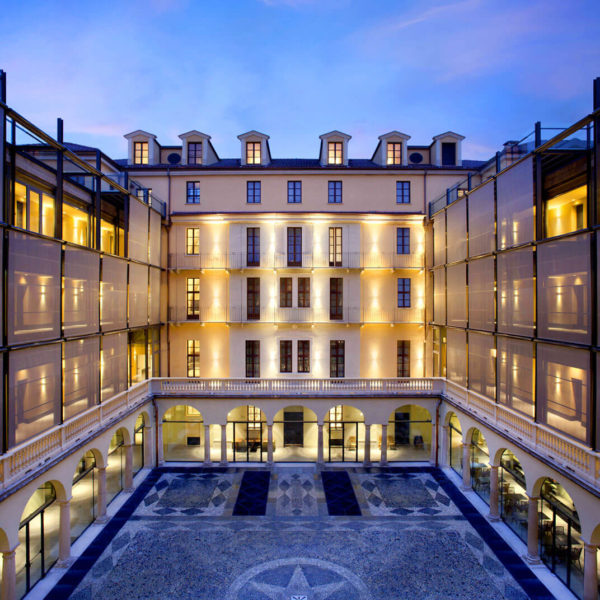
NH Collection Porta Nuova – Project by AI Progetti
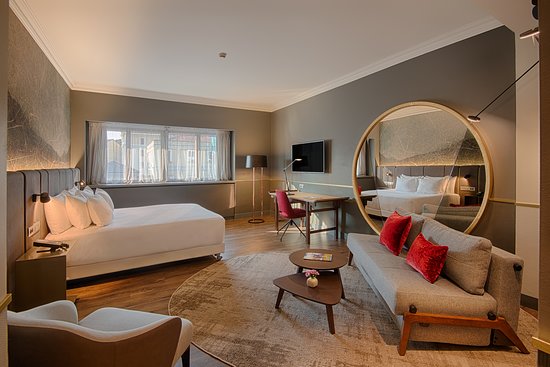
NH Collection Touring – Project by Caberlon Caroppi
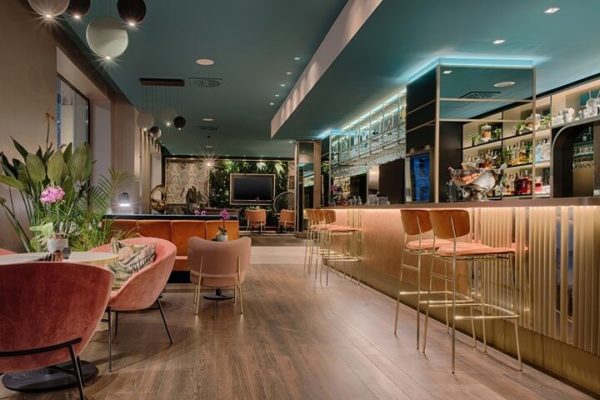
NH Venezia Rionovo – Project by AI Progetti
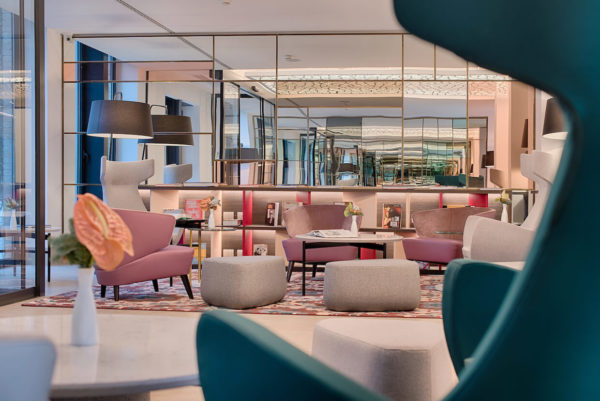
NH Moscova – Project by Studio Scamporrino
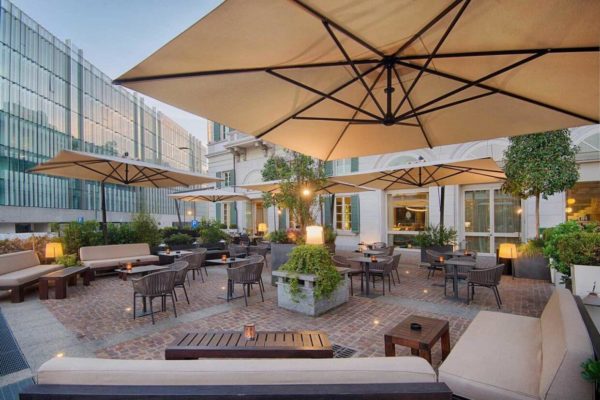
NHOW Marseille – Project by Claire Fatosme, Christian Lefèvre, Teresa Sapey

NHOW Marseille – Project by Claire Fatosme, Christian Lefèvre, Teresa Sapey

Elena Apiou has participated in redefining the design DNA of Accor’s historic brands Novotel and ibis, organizing international design contests, and collaborating with internationally renowned designers and architects such as the Sundukovy sisters, Innocad, Ramy Fischler… She has also contributed to innovative projects (mobile hotel, wellness center…) aiming to constantly rethink tomorrow’s hospitality. She is now the “Head of design” for Adagio Aparthotels (Accor group & Pierre et Vacances) and her goal is to transform and bring more emotion to this brand through new design concepts.
Can you tell us a bit about your background? Where are you from?
I was born in France but raised between France and Spain. This bi-cultural background has given me the habit to keep moving and cross borders.
I studied Public affairs and international management and already tried, at that time, to live as many international experiences as possible (internships, exchange programs…)
This curiosity and interest in foreign countries and other cultures led me to fly to Latin America, right after my graduation, to start working in the tourism and hospitality industry. That’s when I joined the Accor office in Sao Paulo 10 years ago as a financial and operational project manager.
Since the beginning of my career, I have always had the opportunity to closely collaborate with the Design department of the company. I kept thinking that those guys had the most exciting job ever!
I eventually traveled back to Europe in 2013 and working in the design department quickly appeared to be an obvious next step for me. My experience as a project manager, leading international projects, was a valuable skill for Accor Design Director. This is how I entered the design field! I worked for 6 years as a design project manager on new interior concepts. Until I assumed my new job, more than one year ago, as head of design for Adagio Aparthotels.
What has inspired you to work in the Design field?
No matter its nature (interior design, product design, graphic design, industrial design…), the design aims at making people’s life easier and more beautiful. Isn’t that inspiring? ?
Designing interiors is not just arranging beautiful spaces, choosing nice materials and colors or elegant furniture. It goes further than that. Designing interiors is actually designing experiences, that clients will hopefully enjoy and therefore remember. Knowing that we have a direct impact on clients’ feelings is really inspiring.
Design is also very inspiring to me as it is a multidisciplinary and shape-shifting field at the crossroads of different expertise. It’s a thinking process that must address many stakeholders’ needs and views. In the hospitality industry, design bridges the gap between marketing, development, operations, real estate and finance, maintenance, and construction… As a design team, we keep on working with many different people, we bring them together to eventually come up with constructive and beautiful projects that address real needs. This is all the complexity of the design, but this is what makes my job so engaging!
At Accor Group, you have participated in redefining the design DNA of Accor’s historic brands Novotel and ibis, can you please tell us more about it?
The design has become one of the main – not to say the main – differentiator for hospitality brands. In 2016 and 2018 ibis and Novotel went through a deep repositioning with the ambition to remain references in the Economy and Midscale hospitality markets.
Both projects were a tight collaboration between design and marketing teams and followed a similar process.
We organized two international design contests to eventually select the best partners to work with to redefine the brand’s design DNA. But instead of appointing one winner, we decided to choose one interior design studio per main region (Europe, the Americas, Asia and Middle-East Africa). This is how we ended up working with Innocad (Austria), FGMF (Brazil), and Soda (Thailand) for ibis; RF Studio (France), Metro (Brazil), Sundukovy Sisters (Russia – Dubai) for Novotel.
The objective was to come up with a collection of design concepts for both brands, with different regional inspirations but to be deployed anywhere in the world. For instance, the concept designed by Metro Studio in Sao Paulo can be chosen for a new Novotel construction in London.
Both processes have been a great success. Working with different studios simultaneously has turned out to be extremely enriching and has enhanced everybody’s creativity.
The concepts of each brand are today visible in the network!
Novotel new concept by RF Studio – Restaurant
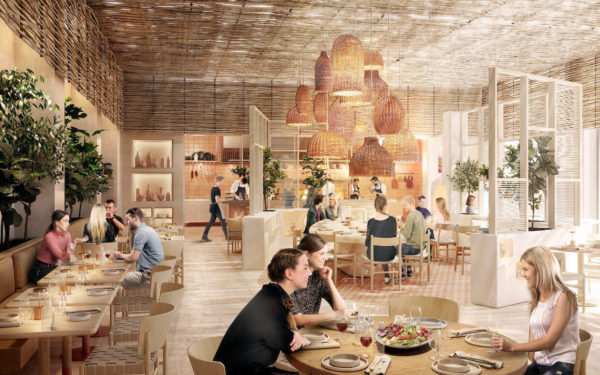
Novotel new concept by RF Studio – Lobby
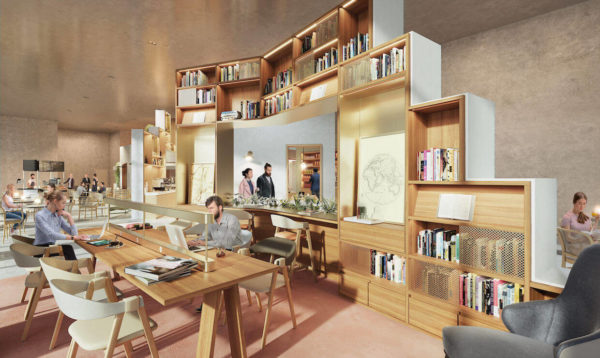
Novotel new concept by RF Studio – Bedroom
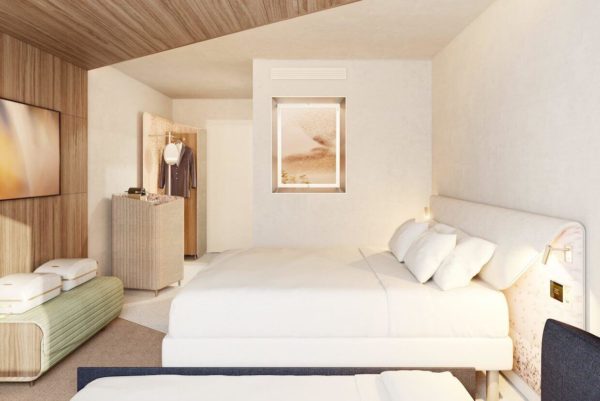
What are the main challenges when designing Aparthotel? What makes Adagio Aparthotels unique in terms of Architecture and Interior Design?
One of the main challenges when designing Aparthotels is turning them into emotional and trendy spaces, while they are too often mainly chosen for their functionality. Actually designing an Aparthotel is designing a real home, where people are meant to stay for weeks even months. And that makes our job quite different from designing a hotel. The memorable experience won’t necessarily come from the aesthetics, the disruptive or impacting aspect of the interior. The memorable experience will come from the flawlessness of the stay, the feeling of home away from home, the sensation of being taken care of… and that needs to be conveyed by design.
Another challenge is finding the right balance between durability and attractivity. When designing a new property we need to design a product that will last for a few years, at least 8 or 9. But today clients are used to seeing new hospitality and F&B concepts popping up every year or couple of years. Their perception of modernity and “trendiness” declines very quickly. Not easy to design interiors in such a challenging context. The key is to respect the brand DNA and to work with talented creatives that will understand it.
For Adagio, this means designing comfortable and warm interiors, to offer the easiest and smoothest experience to our guests. We know we don’t propose a “state-of-the-art” design aesthetically speaking. But we do our best to offer the friendliest and home-feeling spaces. Conviviality and togetherness are two pillars of the Adagio brand and we always have them in mind when working on interior design projects, might they be refurbishments or new-builts.
Adagio Access new apartment concept (pictures ©Abaca)
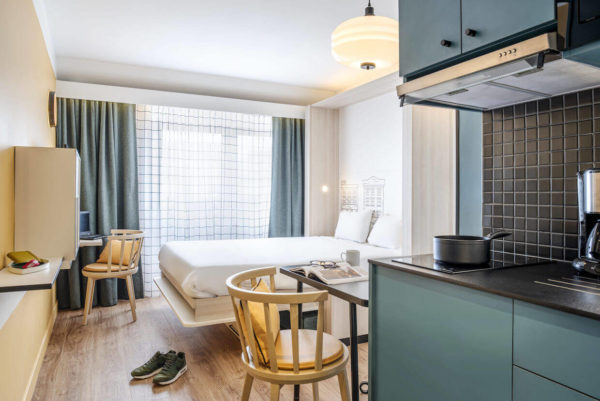
Adagio Access new apartment concept (pictures ©Abaca)
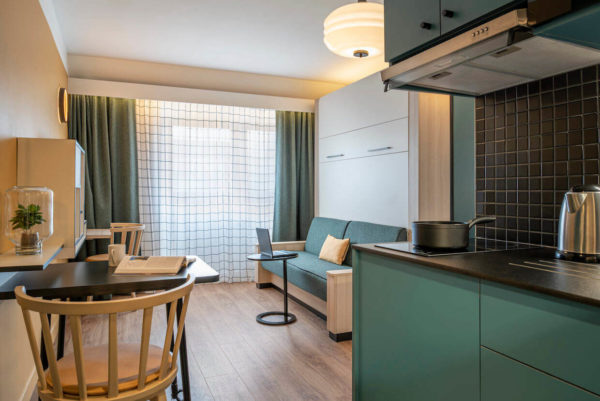
Adagio Access new apartment concept (pictures ©Abaca)
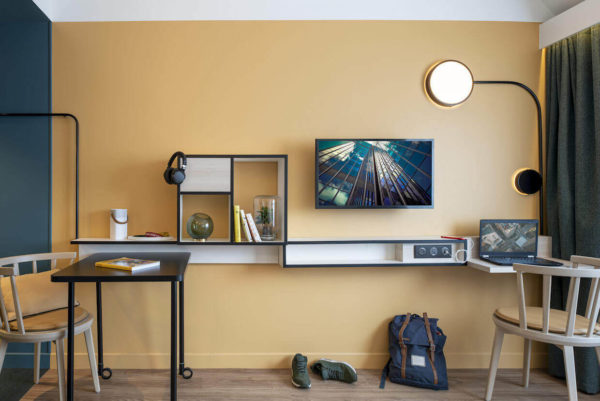
What are you working on at the moment, and do you have any upcoming projects or collaborations that you’re able to share?
We have just released a new concept for the Adagio Access brand (economy long-stay brand) and are currently finishing Adagio’s new apartment concept in collaboration with French designer Didier Versavel.
We are also working on a co-living concept with French studio Numero 111. The idea is to propose – within Adagio and Adagio access buildings – bigger apartments (4 to 6 bedrooms and a big living area) to host families, groups of colleagues, friends…nAnd I have many more ideas in mind for the coming months and years!
Outside of the design world, do you have any other passions?
I guess you won’t be surprised if I tell you I spend as much time as possible traveling ? Apart from the business trips, I try to travel out of France one weekend per month. Eager to get back on track once the sanitary situation gets better.
I love music in general. I really enjoy the opera more specifically. I used to sing in choirs for many years and play the flute. And I am a big fan of my city, Paris. So much to see, to taste, to discover, to live…!
Novotel new concept by Sundukovy sisters
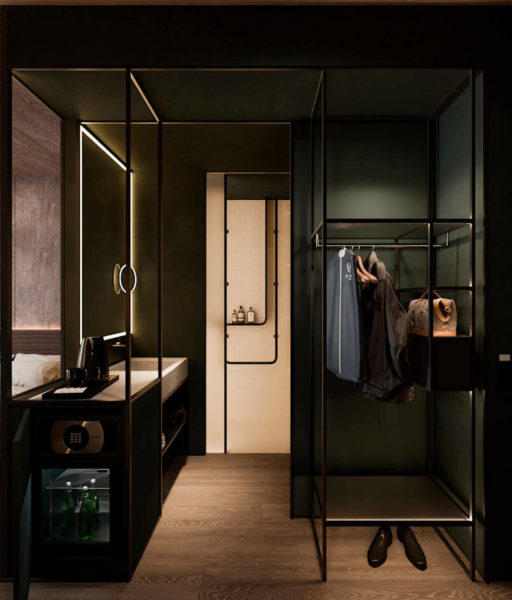
Novotel new concept by Sundukovy sisters
Novotel new concept by Sundukovy sisters
Born in Serbia, Yelena Petrovic is holding a Masters’s Degree in Architecture, graduated from the University of Belgrade, Serbia in 2001. Petrovic relocated to Kuwait in 2007, where she started working on a hospitality project then to Dubai in 2011 which opened new professional horizons with large-scale properties. She is currently the Head of Design, looking at Interior Design and Architecture at Meraas Hospitality, Dubai. Yelena’s passion is luxury hotel design; she describes “Luxury” as being focused on comfort, elegance, and custom touch to embody the highest pedigree of interior design.
Do you mind sharing your story? How did you start working in Design for the Hospitality Industry?
As a trained Masters’s in Architecture and Interior Design, I have been involved in projects like Interior design for the villas, office spaces, schools, but moving to the Middle East opened a new horizon for me in the hospitality industry – design and construction at the same time. My first project has introduced me to the hotel room design, developing of shop drawings, material, and fabrics selection, site follow up of the same, dealing with fit-out contractors to monitor execution… I needed to understand hotel space planning, function, and the philosophy of the hospitality industry, which is essentially connected to serving people. Importance of BOH (what they call it ‘heart of the hotel’), not only the visual aspect of the project.
On my next project, I had an opportunity to design a hotel room on my own, restaurants, lobby redesign, executive lounge, ADD… It pushed me further into hotel principles, relations, doctrines. I was completely into it.
Hotel interior design is an important factor for guests and can increase customer satisfaction. It can also act as a benchmark for the levels of service, quality, and comfort that a guest expects – therefore, good quality hotel interior design is more important than ever before. But the paramount will be to find a balanced design for the hotel’s success, which includes interior design exposed to the guest in great coordination to the ‘invisible part’ to the clientele.
You are based in the Middle East; can you tell us where did you work before moving to Kuwait in 2007?
2001 after graduation, I have worked as a freelancer, in the beginning, did some residential projects, a few shops interiors design and then I was employed in MasinoProject, an architectural consultancy, with emphasis on the architectural design of schools, factories, villas, or commercial buildings.
What is your main source of inspiration and constraints for Middle East properties?
Arab culture is very rich and can be inspirational….it’s language, literature, gastronomy, art, architecture, music, spirituality, philosophy… Constraints, I’d say weather conditions and less local material
What does your current position at Meraas Hospitality involve? Tell us more about your responsibilities?
I am Head of Design in Hospitality, so my role is to manage any aspect in terms of interior design and architecture, for the new coming projects or refurbishments.
Appointing of consultants, Design briefs and direction, Material selection, drawings review, with site overseeing that design intent is followed.
What are you working on at the moment, and do you have any upcoming projects or collaborations that you’re able to tell us about?
A few refurbs, and certain design analysis for future potential projects.
Yelena, your passion is luxury hotel design; How do you think the expectations of luxury hotels are changing? How does property design reflect them?
Sustainability and the protection of natural resources have been a major issue raised in recent years in hospitality: nature has become the new luxury. People started to appreciate it more than before.
In luxury, things can be more powerful than words-for instance service, or a view. It could be something you don’t expect, or something more than you’d expected. It’s the ‘wow’ effect that can go beyond expectations or can be translated into a number of things, in many different ways. These elements you can find in interior design details or in the unique OS&E products, and the customers know to recognize them.
Do you have any tips for aspiring Interior Design and Architects starting their career?
Love what you do, do innovation, Keep updated, have a keen eye for detail, Consider all senses.
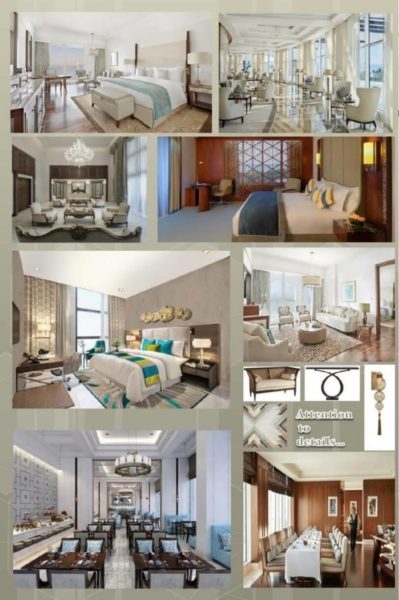
Give your Hospitality project design the recognition it deserved, LIV Awards is pleased to present the official “Certificate of Achievement” given to LIV Winners and Honorable Mentions.
All winners & honorable mentions will receive a certificate of Achievement and LIV Winner Seal as well as be featured on the LIV winner online directory and benefit from the all-year-round media coverage.
LIV Hospitality Design Awards gives 8 winning titles per year to Professional and Student:
Selected by our esteemed jury of Architects, Designers, Hoteliers, Developers, and Leaders in interior Design and architectural fields, the annual winners will receive the LIV trophy, extensive publicity showcasing their designs and project to an international audience, and more.
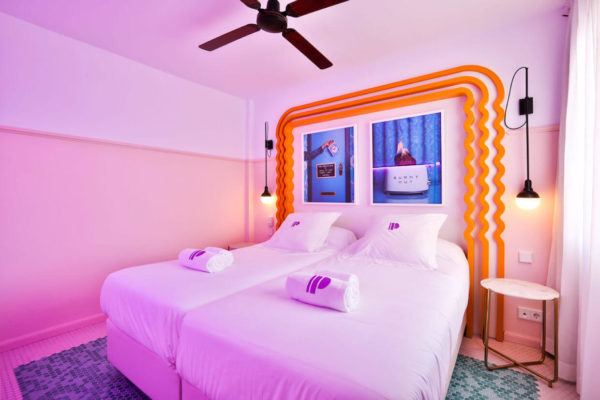
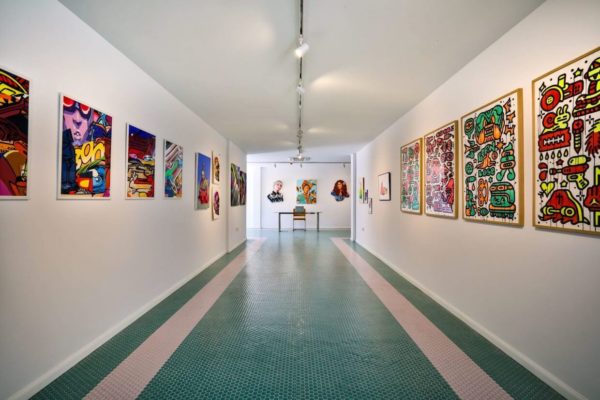
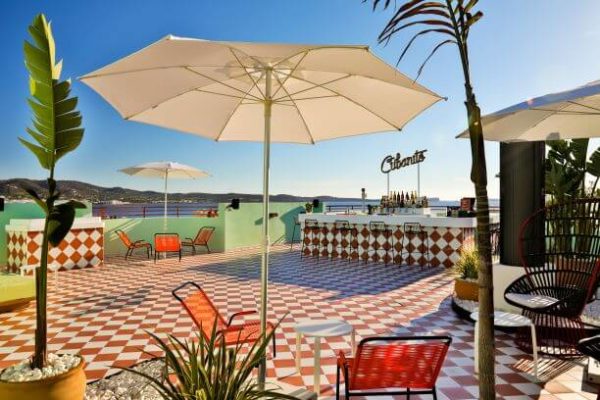
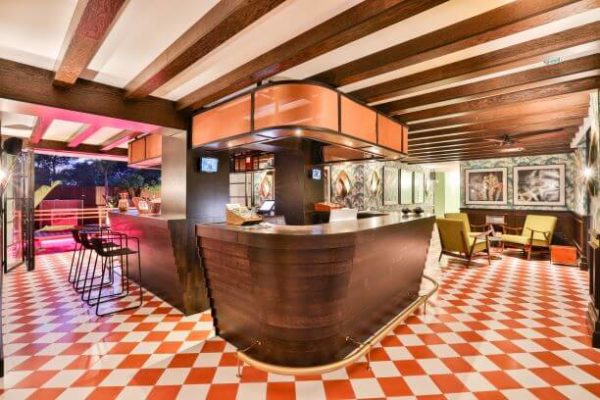
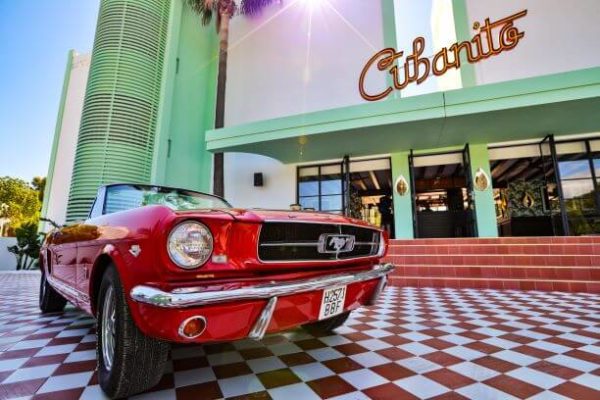
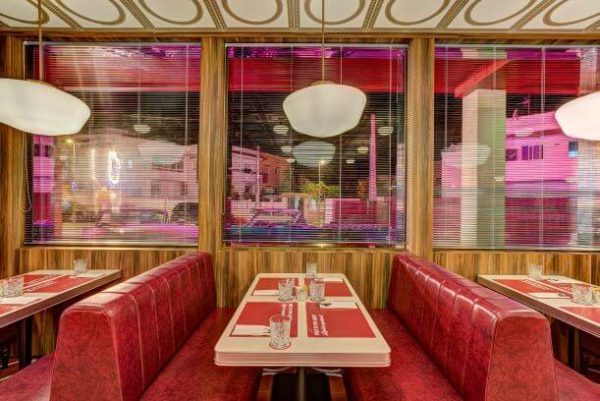
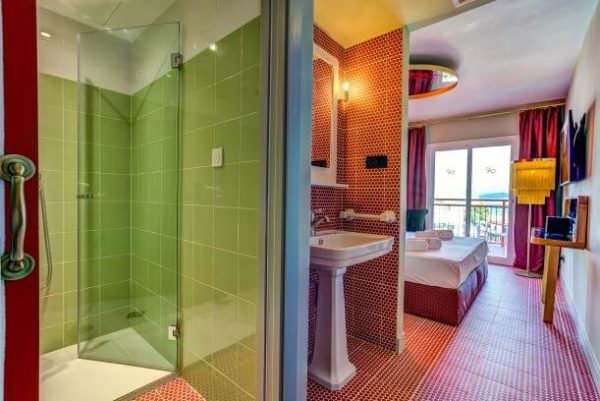
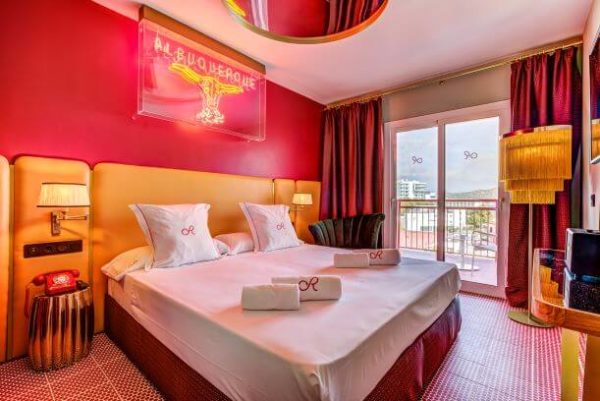
CEO and Founder of Concept Hotel Group, Diego Calvo is a native of Ibiza, the island where he has established his particular and creative vision of the hotel industry, Concept Hotel Group includes 6 hotels, Santos, Tropicana, Dorado, Cubanito, Paradiso and Romeos. With more than 20 years of rock ’n’ roll attitude in the sector, he previously worked in groups such as Marriott, NH and Hilton until in 2013, when he decided to set up his own group of hotels with his friend Tallyn Planells.
Could you tell us a little about your professional background? What brought you to work for the Hospitality Industry?
I grew up in Ibiza, so I realized very quickly which sector stood out. That, and girls in bikinis! (laughs)
You are now the CEO and Founder of the” Concept Hotel Group”, when did you decide that you wanted to start your own company?
I worked in hotel groups such as Marriott and Hilton to name a couple, and that made me want to create something different from what I kept seeing in the hotel business. I felt like changing the rules of the game and breaking the mould, and I think that at Concept, we are succeeding.
Can you please share, what makes “Concept Hotel Group” properties standing out?
Our hotels are places where things constantly happen. They are not only for our guests but also for people who want to come and enjoy the experience. An art exhibition, a performance in a glass room, summer cinema, live concerts… and surrounded by an aesthetic that hits your retina and stays in your memory, and in your Instagram, of course.
This year (2020), you have been included in Fordes Magazine list of the most 100 creative people in Spain. Congratulations! Can you share, what is your creative process when starting a new project?
Thank you very much, the truth is that it was a nice surprise. The best thing about creating a new concept is the road we travel together with Ilmio Design, Andrea Spada and Michele Corbani’s studio. The whole process, from the moment we have an idea until it becomes reality, is a blast. This is why we continue to make hotels; we take care of every little detail with passion. You can see that we love what we do in every single corner. I am personally involved in all the interior design and conceptualization of each project, and I even enjoy choosing a door handle (laughs)
Are you working on new properties, refurbishment or extension projects?
We always have something on the go, although I can’t reveal it yet. All I can say is that we look forward to showing you what’s next for the Concept Hotel Group.
Do you have any favorite Interior Designers or someone that influence your creativity?
I have so many! Some of my favourite interior designers and architects are Verner Panton, Ettore Sottsas, Ricardo Bofill and John Lautner, but I have also been influenced by hoteliers who have taken this profession to another level, such as Ian Sharger, Alan Faena and André Balatz.
Outside of Hospitality and Design – what are your other Passions?
This one is easy: music. Another of the pillars of Concept and my personal pillar for each day, I wake up listening to music and I love traveling to concerts. Hopefully, I’ll get to see Pearl Jam in Hyde Park in 2021. I’m also a fan of vintage culture, I collect western and Hawaiian shirts and I’m crazy about classic American cars.
Below Photographer: Jordi Gómez
Tina Norden is an interior designer and architect with a diverse portfolio stretching across many contexts and continents, from hotel and restaurant design to high-end residential. She studied architecture at Westminster before joining Conran and Partners in 1997, completing her MA in Architecture & Interiors at the Royal College of Art in 2000. Tina is now a Partner at Conran and Partners firm and has joined the LIV Hospitality Design Awards Jury panel.
Could you tell us a little about yourself? What inspired your love for architecture and interior design?
Brought up in Hamburg, Germany, I wanted to either become an architect or a diplomat – little did I know that my career in design would eventually neatly encompass both!
Part of the attraction of a diplomatic career was travel and getting to know other cultures and countries – something I have been fortunate to do in spades as an architect. And dealing with clients, consultant teams definitely requires refined diplomatic skills!
Growing up we traveled a lot in Europe with our parents, taking in the magical architecture of the great cities across the continent, so the seeds were sown for an ever-growing interest in cities, buildings and space.
My father was a landscape architect so the design genes are most definitely there – I grew up going to site with him, holding the measuring tape and sitting in his office scribbling on his drawings. As it turned out my green thumbs were not as developed as his so bricks and mortar seemed the better option.
Moving to London started the biggest love affair of my life – with one of the world’s great cities. I fell for London on a school trip and never looked back. As soon as I had graduated with A-levels my bags were packed for a year out in the city – which turned into over two decades and counting!
What was your background prior to working for Conran and Partners?
After deciding to stay in London, my journey into architecture started with a BA at Westminster University. During this time I spent a summer working in NYC for a disciple of Marcel Breuer’s, Herbert Beckhard, which nearly persuaded me to leave London for the Big Apple!
Experiencing interior architecture and design for the first time in my year out at Conran, I then decided on a Masters in Architecture and Interiors at the RCA – sadly no longer a course they offer as it was the perfect combination. Mindblowing in many ways as all of a sudden us architecture students were about the least creative in the building – watching in awe the incredible work done by our fellow students in the various design and art disciplines.
Unbelievably, I have pretty much spent my entire career at Conran and Partners, starting as a year out architecture student all the way through my Masters to become a partner a few years ago.
I have always enjoyed the close relationship and crossover between architecture and interiors we have in the studio, which for me is fundamental in creating spaces. I love our team and the creative freedom we have in our design work so there was never a need to go elsewhere!
What is your main priority when starting projects? Is there something that is fundamental to your practice – your philosophy and your process?
We always start our company introduction with a quote about creating stories and with our founder Terence Conran’s principle that design should improve the quality of peoples’ life.
Our projects are always concept-driven, based on research, the context and importantly the people using the building. From this investigative foundation, we come up with a unique concept approach for the project that informs the design direction, material choices and decisions made throughout the project.
We believe in bringing the architecture and interiors together, no matter what aspect of a project we are responsible for, ensuring that the spaces are optimized and work for the end-user.
Spatial consideration and manipulation is a key part of that, in particular in interior design – we love an interesting and thought through section!
What can you tell us about your on-going projects?
The next project is always my favorite – and that is not just a flippant comment to a new client. Getting excited about the new challenge, being able to bring experience from previous projects to the next one and starting with the (now proverbial) blank sheet of paper is key to keeping us creative.
We have a number of great projects on the drawing board, from a new Park Hyatt in PRC to a boutique hotel renovation in Prague and a number of residential developments in the UK and South East Asia so are looking forward to how they will develop!
Have you noticed any particular recent trends in Interior Design or Architecture?
The notion of trends in architecture and design worries me as we design for timelessness rather than trends – style rather than fashion. Of course in the age of the internet none of us work in a vacuum of pure inspiration and no doubt in particular in interior design we are inspired by what happens around us.
However, it is important to filter this and view it through the lens of a particular project and the concept for this to ensure that it actually can form part of the story and make sense in this context.
There are however a number of more overarching themes that have been around for some time and a growing stronger. Sustainability is the key one, fundamental in an industry that counts as one of the greatest polluters.
A sense of place, design that is specific to its site and location is another pervading theme that has been at the forefront for us designers and clients.
Multifunctional spaces are another hot topic and the key is always to ensure these spaces work for the users in many ways whilst still having a distinct personality.
Which architect most influences your work or your work habits?
Starting with my first architecture professor, Alan Cunningham, who was a true modernist, I have always admired this style and its protagonists. The principle of form following function, of considering the human body and experience has been a thread throughout my career.
Whilst I love Mies and Corbusier, my personal favorites are the architects that have developed a softer, more human and version of modernism with a distinct sense of place – Kahn, Barragan, and Bawa stand out for me.
More contemporary inspirations are Kerri Hill, who mastered restraint and knew how to manipulate space and landscape, Neri + Hu who produce absolutely stunning and thoughtful work, and not to forget my Masters’s tutor David Adjaye.
As a huge fan of Californian modernism, I would love the career of Marmol Radziner – they have created such beautiful houses and are masters in reinvention and bringing modernist pieces back to life.
What are your passions outside of the design world?
Travel is probably my biggest passion and I am very fortunate that (pandemics permitting) aside from leisure travel my work has taken me all over the globe. Experiencing different cultures, meeting interesting people, different viewpoints, food, habits – all of that fascinates me endlessly. And of course, I specialize in hospitality design so experiencing new hotels is basically homework!
Food is very much part of that too and we never miss an opportunity to check out a new restaurant or cuisine.
We also love contemporary art and visit galleries and museums wherever we go and London has some incredible ones that are on constant rotation.
Film is another passion – ideally on a large screen or on a long flight. There is something about shutting out the world for a couple of hours that is absolutely magical.
And finally jewelry – both collecting interesting and unusual pieces (I never leave the house without a fabulous necklace!) but also dabbling in making my own. Sadly not something I get near enough time to do!
Mrs Tina Norden’s projects at Conran and Partners:
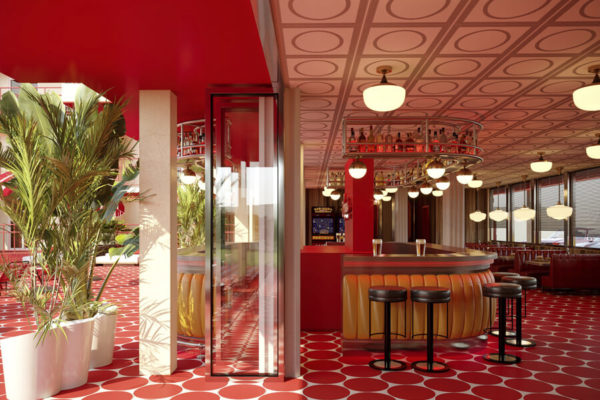
FEAST restaurant
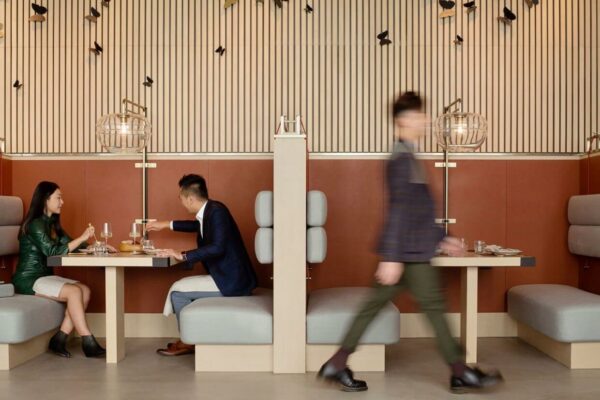
Maximilian Hotel
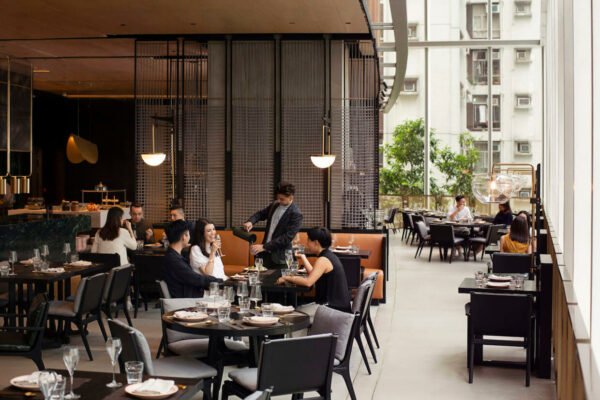
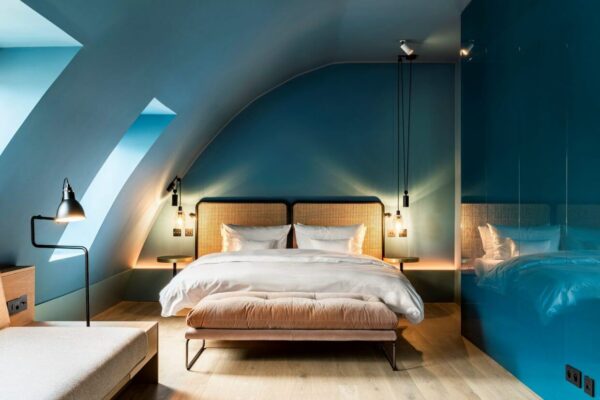

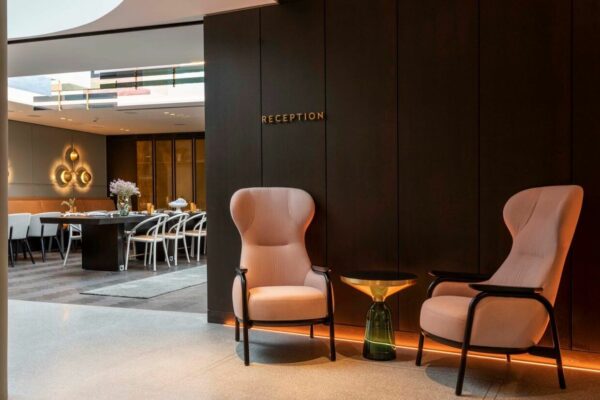
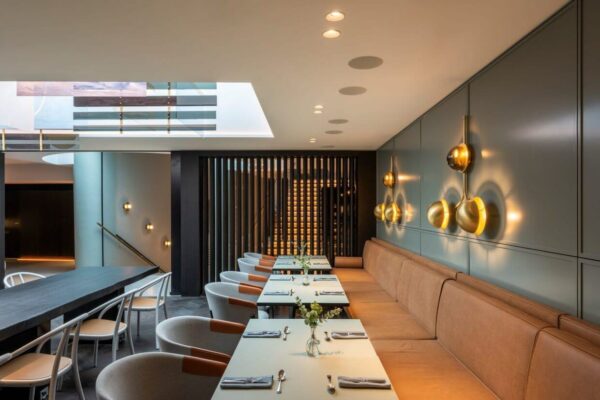
Photo credit: Matthias Aschauer
Park Hyatt Auckland
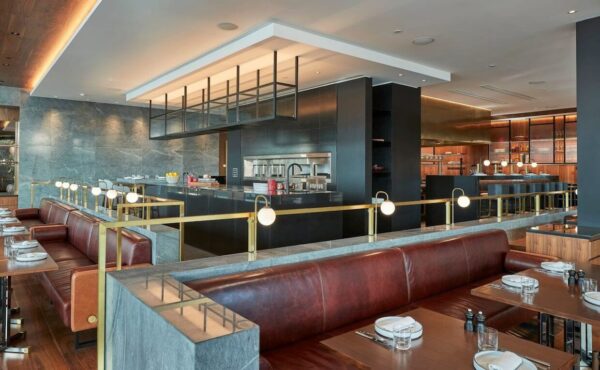
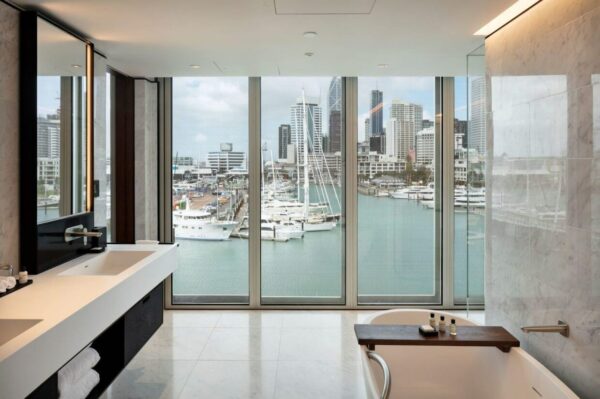
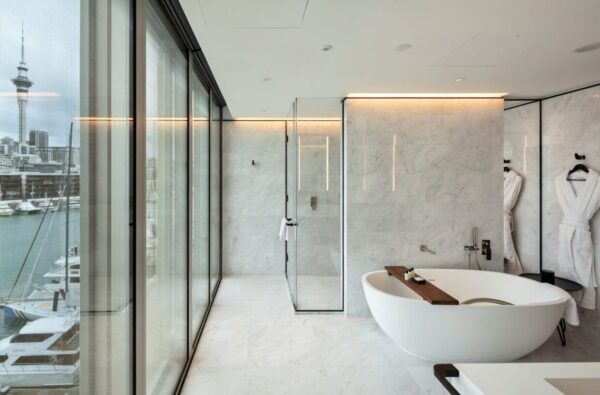

Photo credit: Onemata Simon Devitt
Born and raised in Nairobi, Kenya, Apiyo Aloo has always been passionate about four things: Hospitality, Sustainability, Growth & Africa. With over 13 years of experience in the global market, Aloo has worked for Best Western hotels, Hilton Hotels, and one of the best 50 restaurants in the world, among other international brands. Based in Nairobi, Aloo is the Founder and Director of Development at Lustar Group REIT Ltd, a hospitality Real Estate Investment Trust in Africa that focuses on creating Unique and Innovative hotel Brand Concepts that connect with guests Emotionally.
Could you tell us a little about your professional background?
My first job was working at Lord Errol, a 5-star restaurant in Nairobi, Kenya, as a casual in the pot wash, right after high school, I was only 21 yrs old. I turned down an opportunity to go to Moi University to study something completely different from what I had a passion for. I simply wanted to be a hotelier, and my mind was set.
I was quite lucky to join Kenya Utalii College right after, the best hotel school in Africa, at the time, to study hotel management and I never looked back. This journey has exposed me to various positions both locally and abroad as I started my career in restaurants, having managed one of the 50 best restaurants in the world and later moved to the hotel space and worked for both Hilton Hotels and Best Western among other brands, focusing on F&B, Operations, Rebranding, Repositioning and later a Pre-Opening General Manager for a 5-star independent property in Tanzania. This experience introduced me to hotel development, which I found quite fascinating.
With an aim to learn more about hotel development, I started a journey that led me to some of the best hotel schools in the world, Cornell University and most recently, Ecole Hôtelière de Lausanne (EHL) in Switzerland, where I pursued an MBA in Hospitality Management, an experience which changed my outlook of the hotel industry globally and shaped my life for a new journey.
Most recently, I have been involved with Alliance Hospitality as the Business Development Partner – Africa, focusing on hotel development projects across the continent, the Regional Director for a Hospitality Investment and Financial Advisory Firm, Advisory board member for Tourism Development Association in Africa, a Typsy Mentor and Coach and the Founder and Director of Development of Lustar Group REIT.
You have founded the Lustar Group REIT Ltd, when did you decide it was time to start your own company?
I have always been passionate about four things, Hotels, Development, Sustainability & Africa.
Africa has so much to offer, the culture, authentic experiences, and most importantly, the people. We are pre-disposed to hospitality as it’s always been taboo to visit a friend without a gift or turning away guests without offering them food or accommodation.
My decision to set up shop was driven by the challenges I saw Independent hotel owners/investors were experiencing. The lack of authentic, unique and emotional guests’ experiences that deliver indelible memories. In 2016, I wrapped up a project which was an eye-opener and Lustar Hospitality Group was born, first as a consultancy that focused on hotel development projects in Africa.
While doing my MBA at EHL, I met one of Hospitality’s greatest minds, Stephan Killinger, Martin Ehlers and Claudia Vivaldini, luxury hospitality gurus who took the time to advise and mentor me. This pushed me to realize my dream of developing a platform where unique boutique hotel concepts are brought to life from a mere idea to an operational going concern.
This experience led to the morphing of Lustar Hospitality Group (LHG) into a Hospitality REIT, which focusses on Hotel development projects in East and West Africa. With an aim to be the leading, African owned, Hospitality REIT, a daunting task that still puts me on toes to date, but the best experience in my life by far.
With a market place driven by unique guest experiences, a hotel with an individual character and unique tailor-made experience can be leveraged to surpass guest expectations and achieve the highest guest satisfaction and review score.We provide personalized hospitality management services, tailored to the individual requirements of each and every single property.
At LHG, we believe in offering an authentic African experience innovation, sustainability, wellbeing, and emotional connections with our guests, team members and stakeholder.
In the last years, you have created three hotel concepts, can you please walk us through each concept?
 Ankara Collection is our flagship brand offering an Upper-upscale African Fashion Lifestyle brand experience, in remote tropical locations that merges the unique African sense of culture, adventure, fashion, sustainability and lifestyle, with an International touch of class and elegance, offering our guests a uniquely African experience, through the famous Ankara print that is widely known to represent our African identity, across the globe, simply elegant.
“The African Experience”
 U-centric hotels is our economy brand that focuses on the discerning business traveler with a brand promise of an experience that is ‘guest-centric’ and for your basic needs – (limited service hotel), as you stay with us. A 4-star experience at 2-star prices
Embedding a quiet peaceful, comfortable, and state of the art guest room with innovative amenities to enhance your experience.
It’s all about U”
 Colive focuses on the human basic need of interaction and sense of belonging, creating a communal sense of lifestyle in a hotel setup – mixed-used facility, targeting the increasing professional nomad’s millennials and generation Z. The rise of coworking is a natural predecessor for widespread coliving: the concept that guests can live in a shared space without recreating the feeling of living in a dorm room as co-living has become the newest disruption of surplus space to…
“Connect | Cowork | Coplay”
Which countries are you developing these properties? How many hotels do you have in the pipeline?
We are focusing on West African and East African Market with six properties through HMA and Joint ventures, both greenfield and brownfield projects with different investors. However, Covid has led to a temporary halt in our development strides as we now take a step back and re-strategize the way forward. For more information, please visit our website: https://www.lustarhospitality.com/
What do you feel will be the key issues and challenges affecting the development of the hospitality industry in Africa in the coming years?
Funding remains the biggest challenge across the continent as our industry is still not a regional priority and banking institutions require a lot of securities which can create complexity in structuring the right deal. Costs of financing are usually high and therefore an operational burden that can be carried on a project and its initial investment may quickly result in questioning the viability of pursuing it or not. A lot of individual investors are willing to walk through each step, but the lack of accessibility and of a large network of financial support often create further obstacles for a project to see its completion.
In addition, in order to ensure proper work, each project requires a professional design team and not every country across the continent has the local structure and this often requires foreign assistance which equally comes at a cost. Usually, costs of construction across Africa are the highest globally due to those factors but as we see hospitality becoming a national and regional priority for many African countries, we can expect the professionalization of the sector and the reduction of the associated costs over time.
What is the single most important thing that people should know about you, or your work?
I am a strong advocate for partnerships/collaborations, strategy, professionalism, transparency and sustainability. My love for the African continent and passion for hotels, fuels my drive to see the growth and development of the Hotel industry in Africa thrive. Coming from a humble background to interact with amazing people from all walks of life has taught me one thing, humility is key. Every hotel project is unique in it’s own way, and should be approached exactly that way…..uniquely. Guests are no longer looking for products, but experiences, hotel development should be guest-centric, not investor centric at the end of the day, a hotel is just a building.
“It always seems impossible until it’s done”. – Nelson Mandela
You have founded “Beneath My Smile” Foundation – can you please tell us more about the Foundation and its roles?
Mental health in the Travel, Tourism & Hospitality Industry has been a major issue for decades, more so in developing countries, but a silent one far too long. We serve our guests and colleagues with a smile but with a lot of pain underneath our smiles. Long working hours away from family and friends, Depression, poor social and psychological well being and even suicide cases are on the rise within the hospitality industry, worse of, post-Covid. I lost a close friend who was going through depression and this triggered my interest in focusing on improving mental health and awareness in the hospitality & tourism industry. At Beneath My Smile Foundation, we create a safe haven for individuals who feel lost, going through depression, alcohol, drugs & substance abuse, suicide survivors and victims & dependents, various mental health-related conditions and are in pain, all of who work in the hospitality & tourism industry.
For the past 5 years, we have managed to help give these individuals a shoulder and a support system through various partnerships and sponsors. Our main goal is to improve the mental well-being of professionals working in the industry, support families left behind due to suicide cases, advocate for mental health education in training institutions, and the workplace and eliminate alcohol, drugs and substance abuse among professionals in the hospitality & tourism industry. At Beneath My Smile Foundation, we aim to give you a sense of belonging and self-worth. We are your family, we also smile and we share your pain.
Last, what shall we wish you for the next 5 years?
My goal is to bring an authentic African boutique hotel brand experience to every continent across the globe to showcase who we are, our culture, our food, our fashion, our tradition with a touch of excellence and international standards, this can only happen if the hostel industry survives, if every small hotel owner/investor survives post-Covid, this can only happen if we all work together to reopen our hotels globally, support each other through meaningful cross-continent partnerships and collaboration.
My only wish is that we all make it through this hard time together and toast all the wins and losses we will have, 5 years down the line.
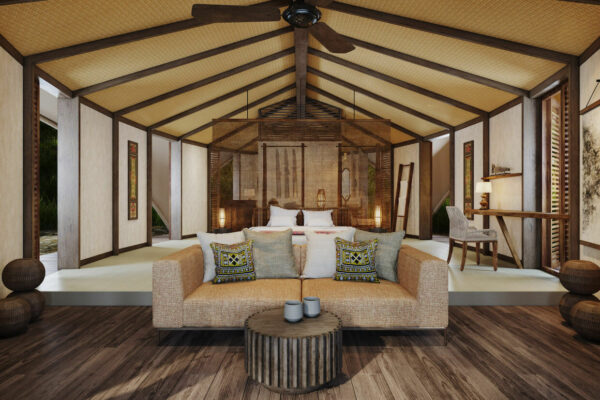
Ankara Collection Hotels – Victoria Falls
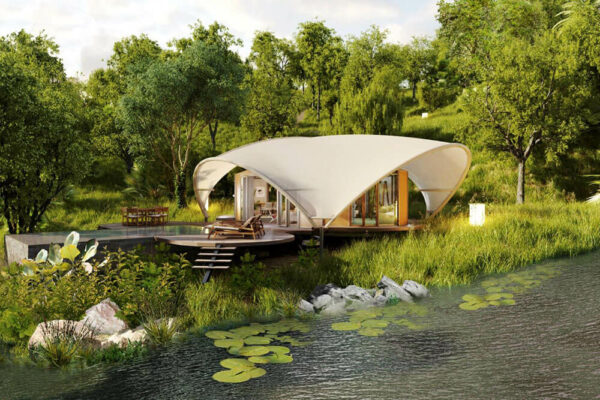
Ankara Collection Hotels – Serengeti
Ucentric Hotel – Nigeria
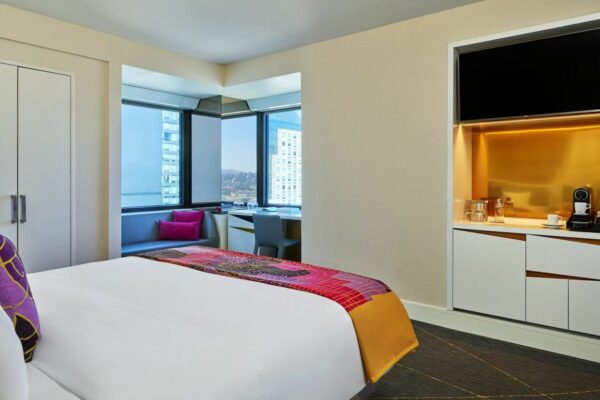
Ucentric Hotel – Nigeria
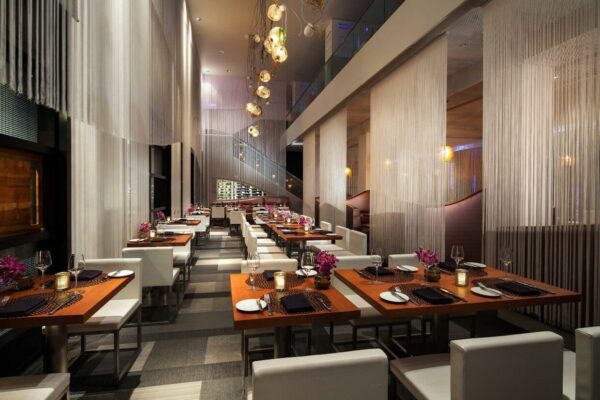
The fundamentals of interior design will never change as they are what brings the elements together into a cohesive, definable, and aesthetically pleasing visual medium.
Some people do have that innate talent of transforming a room into a jaw-dropping interior space. Bringing in mixes and matches of great finds from thrift stores and even from bargain home depot shops, these talented people can bring together the elements into a stunning and tasteful interior.
Although there’s no magic when it comes to interior design, instead, it’s how one makes use of these basic principles. Much like professional designers, where following these fundamentals are paramount in creating aesthetically pleasing and functional spaces.
But, note that creating harmony doesn’t mean designing without variety. There should be a balance between the two to create a vibrant and cohesive interior design.
A worth-mentioning type of harmony in interior design is color: Color Harmony. A room’s color or hue is probably the first thing we notice in a room and as a universal language that can convey a myriad of emotions and meanings. As an essential and fundamental principle and the element of interior design, it can affect the overall look of a room. As bright and neutral colors bounce off light, it can make a room look seem larger while dark hues, on the other hand, can make a room cozier and smaller.
Ways to Create Balance: Symmetrical Balance. Usually has a focal point. It is where assigning a central point where elements are used similarly to each side. This is demonstrated on one-point perspectives in painting and visual graphics. Asymmetrical Balance. Unlike symmetrical, the form, color, and other basic elements may not be duplicated, but instead, use different elements but still have the same perceived weight or intensity. This still achieves balance from the center point.
For instance, for a Savanah themed interior, you can use leaf-patterned wallpaper with green shades. Taking a cue from this pattern, you can choose to have similar leaf prints on your throw rugs or even on your sofa covers. Add sculptural vases with avocado green hues on reddish wood oak center tables and embellish the ceiling with black chrome-plated drop pendants to finish the look.
Contrast is an essential aspect of creating designed spaces. In an interior designer’s book, contrast is an effective way to emphasize a focal point or how to showcase, say sculptural furniture. Repetition and similarity can be blunt, and with contrast, it can make elements pop.
Even the best successful designers do break the rules when it comes to principles of design. But, if ever they do so, typically, a commendable quality is at stake. Unless you have gained extensive experience in interior design, it is still best to follow these fundamentals. If you’re ready, then you may bend a rule or two!