
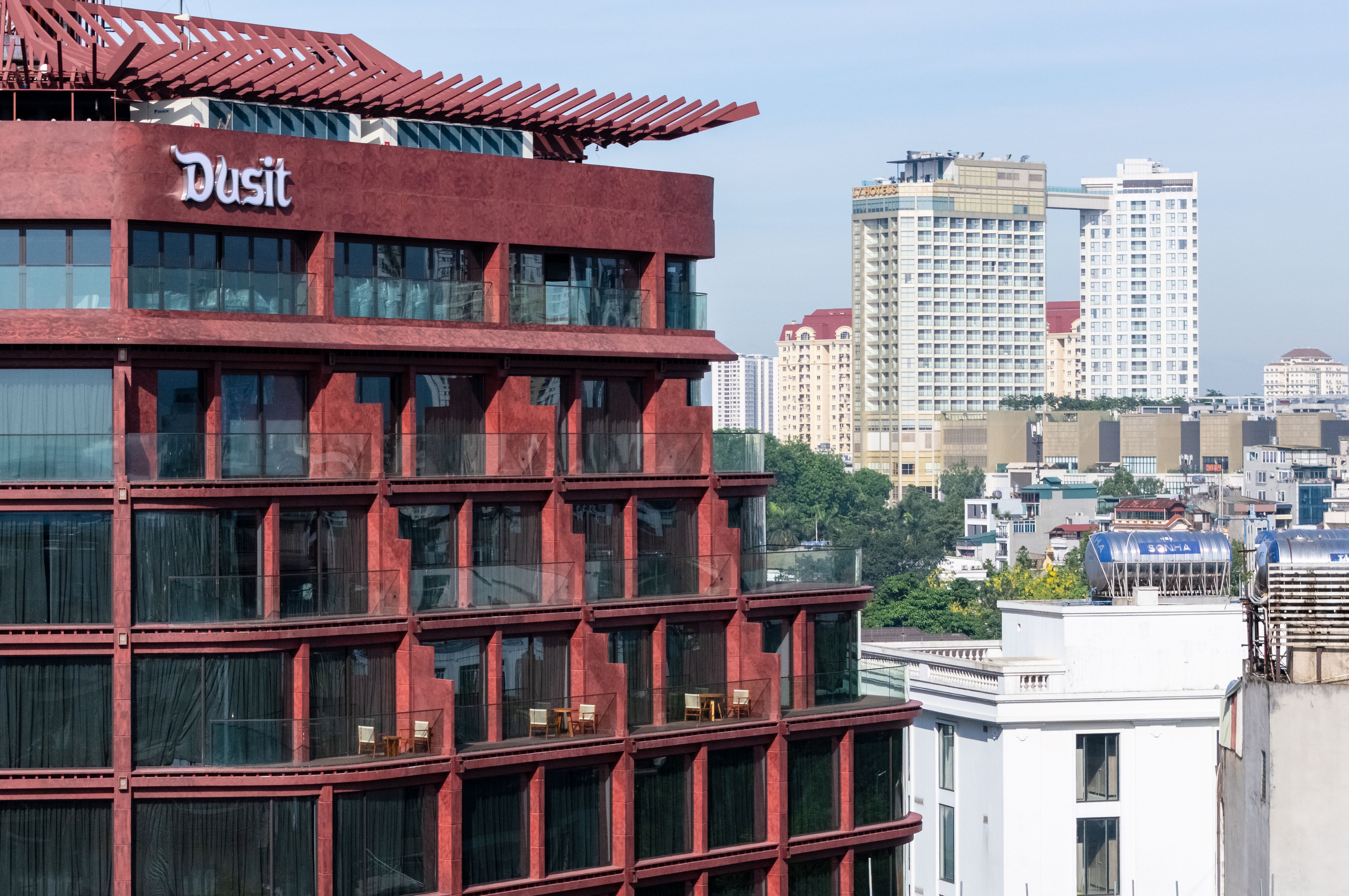
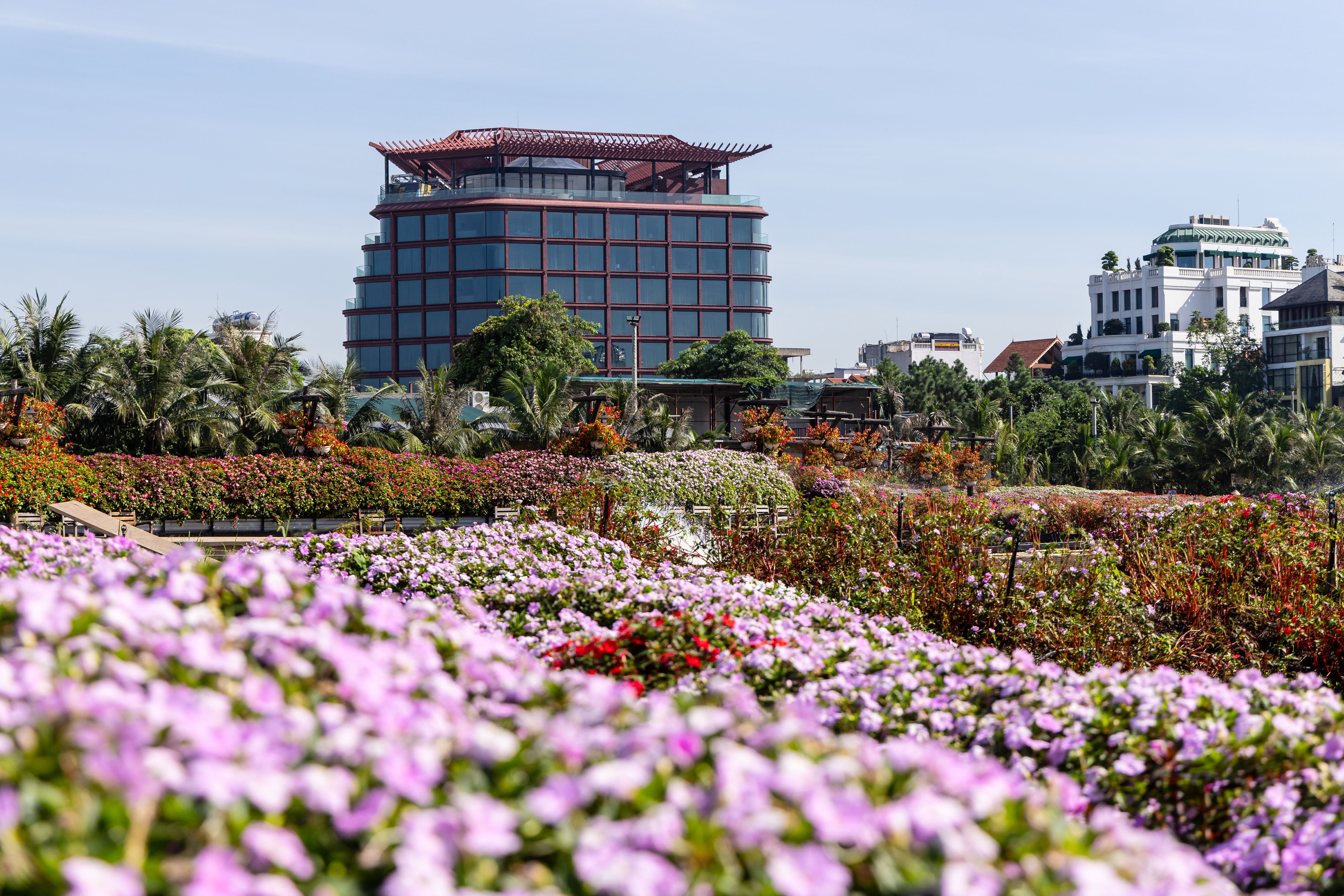

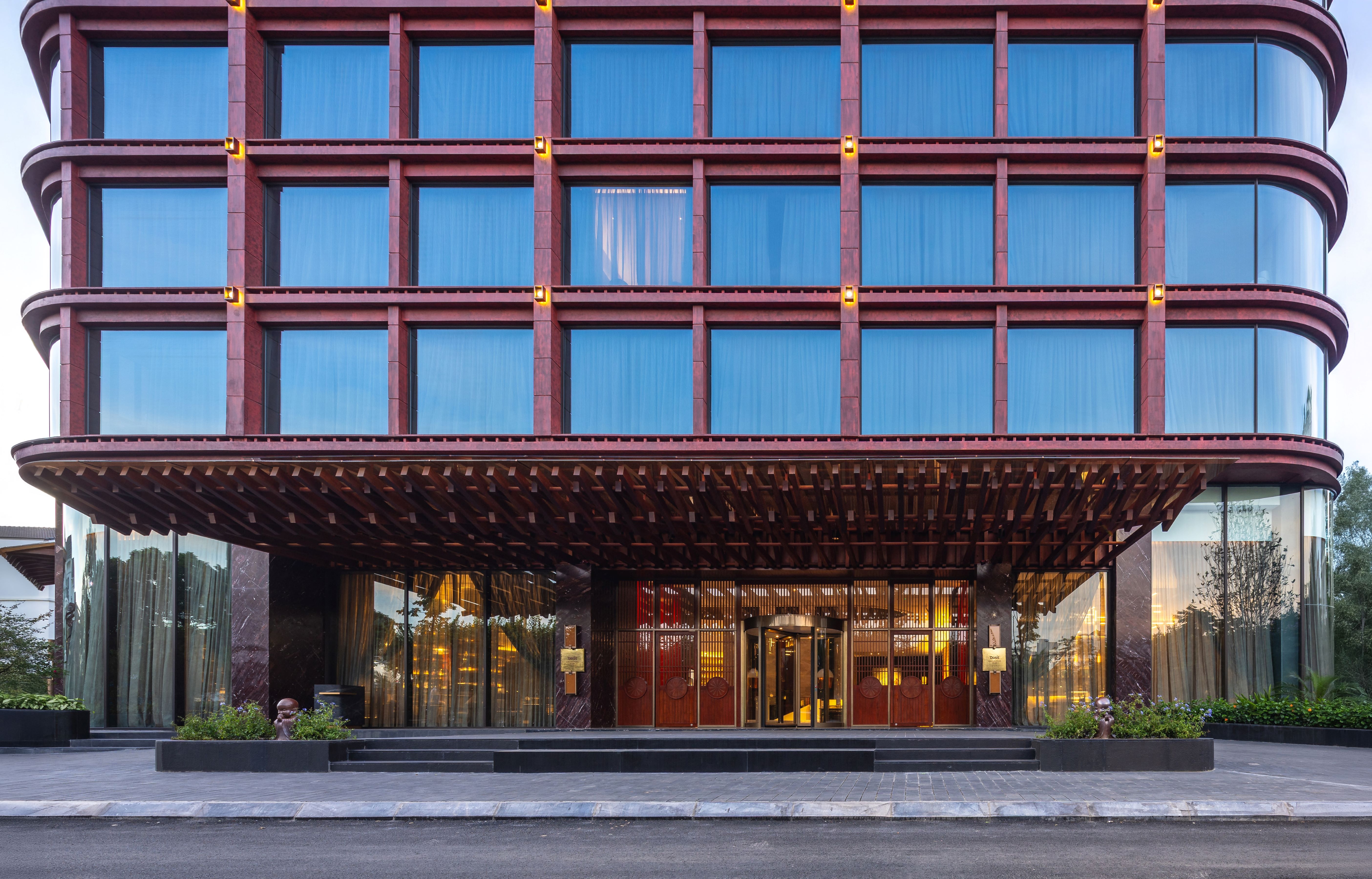
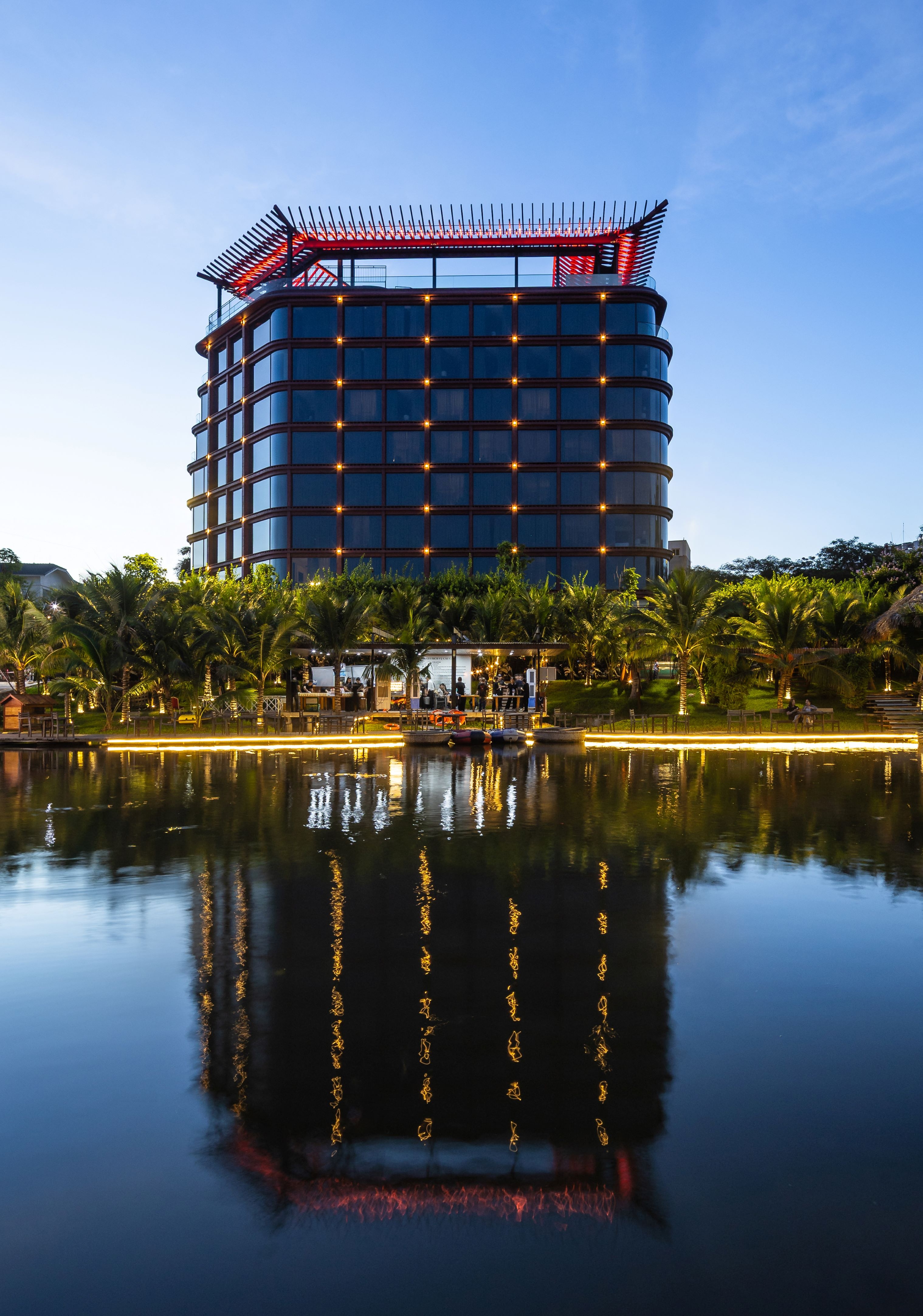
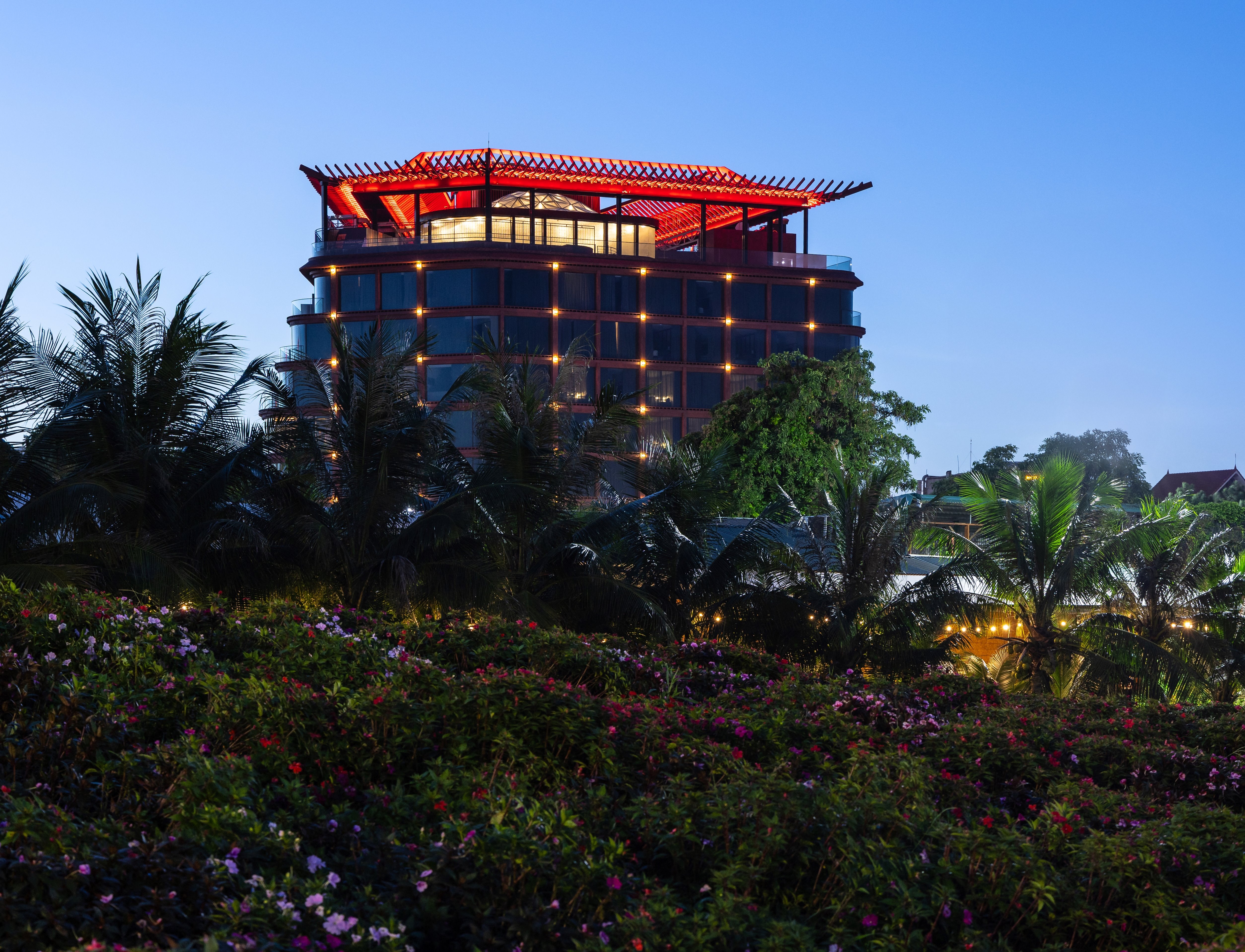
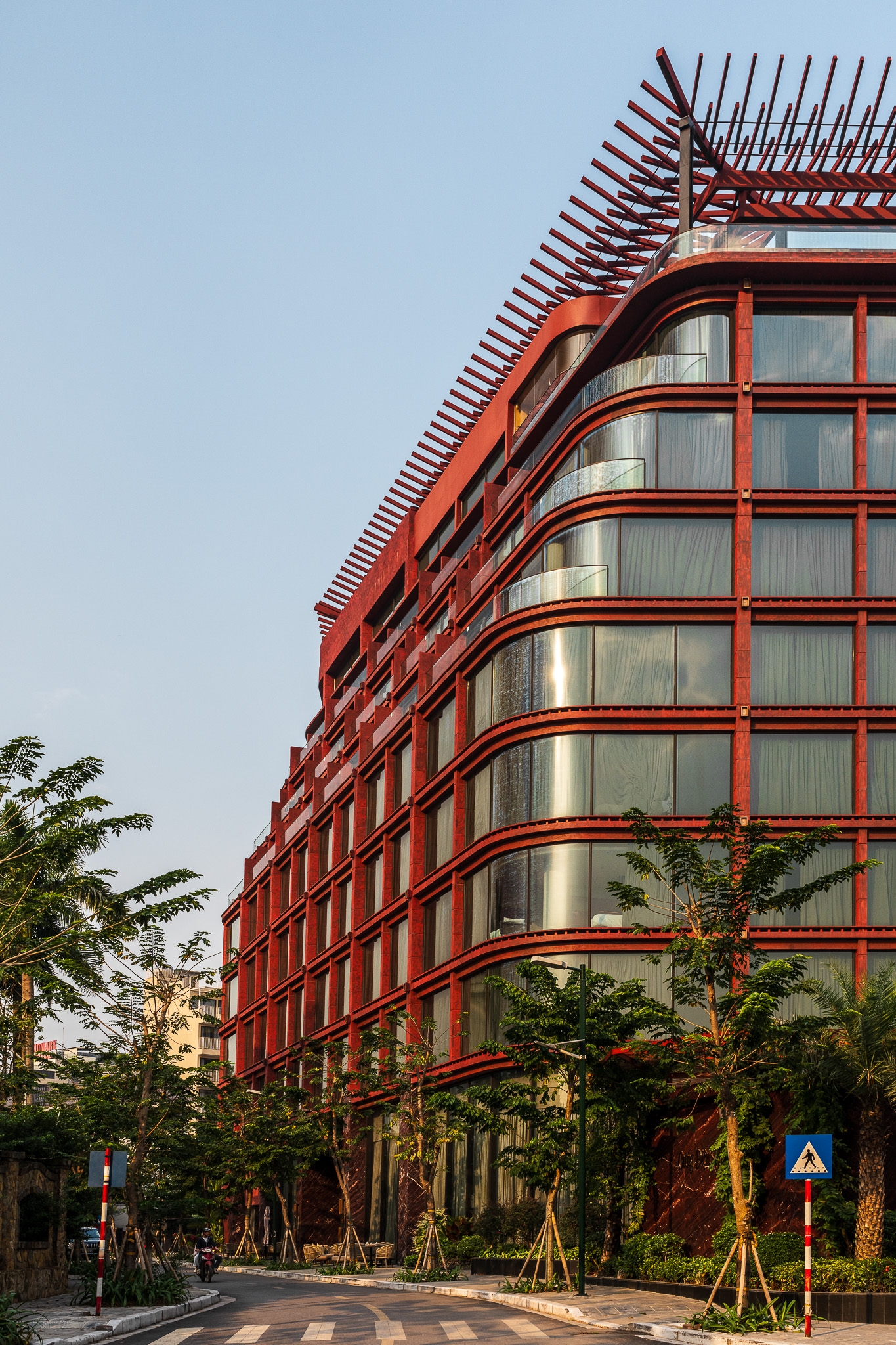
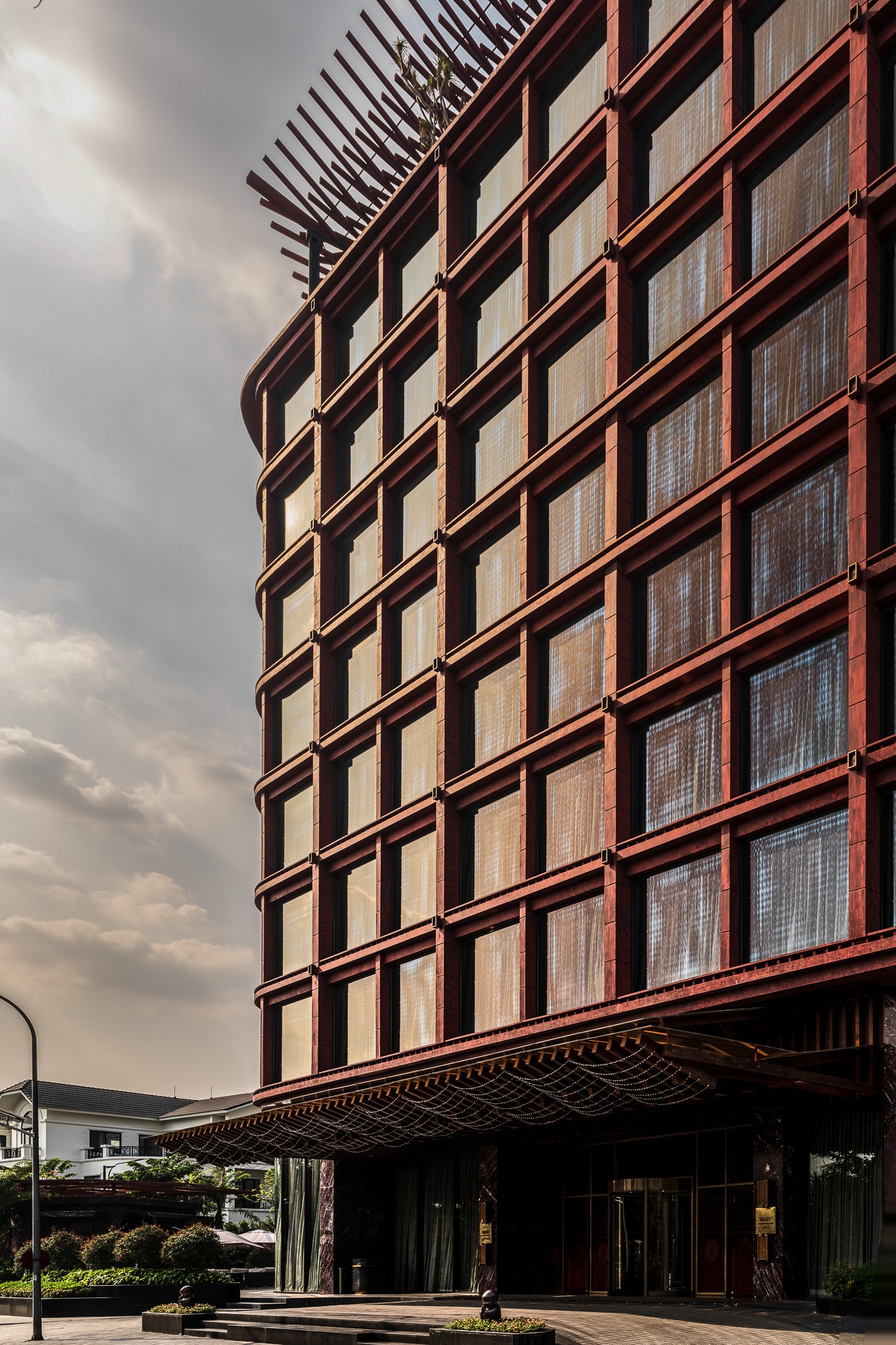
Rooted in the timeless landscape of Hanoi, the Dusit Tu Hoa Palace Hotel rises at the meeting point of majestic nature and living culture. Shaped for over 4,000 years by the Red River, and anchored by the poetic waters of West Lake, the site sits within Nghi Tam and Quang Ba—historic villages once forming part of the Thang Long Citadel, long celebrated for agriculture and sericulture.
This place is inseparable from the legend of Princess Tu Hoa, daughter of King Ly Than Tong, who established a hamlet to teach mulberry cultivation and silk weaving. Her residence, Tu Hoa Palace—now the Kim Lien Pagoda complex—stands as a lasting symbol of cultural generosity and architectural harmony.
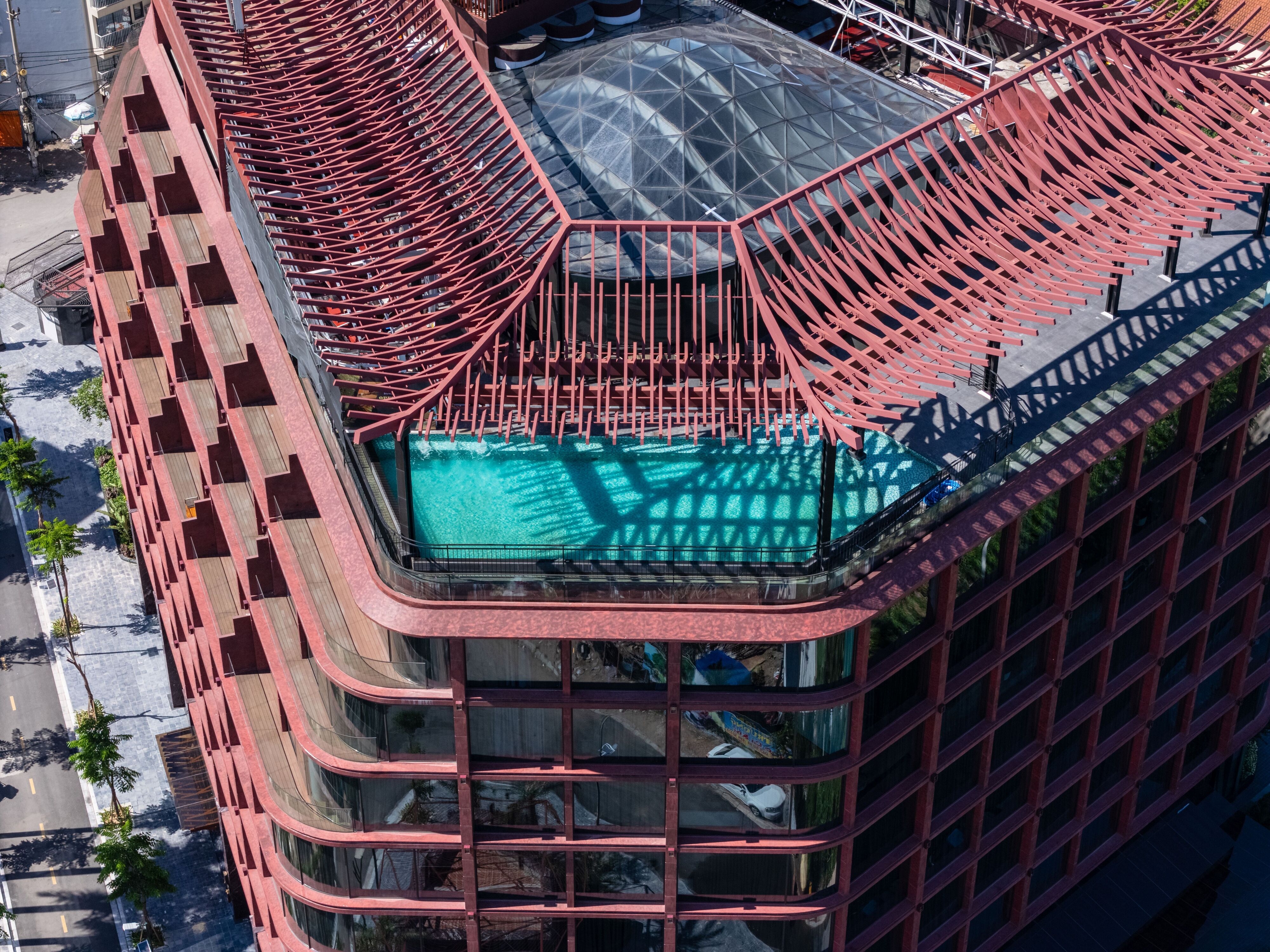
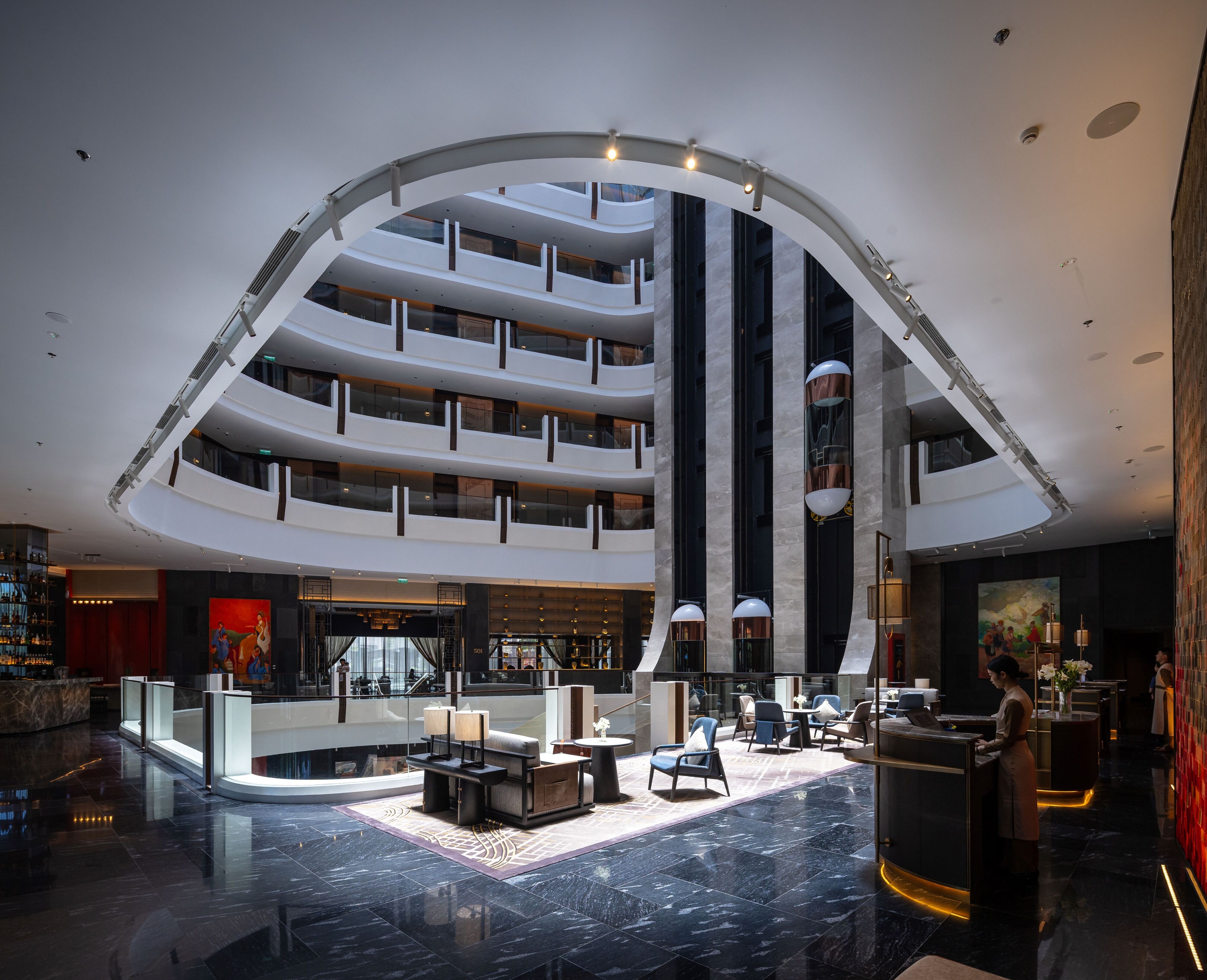
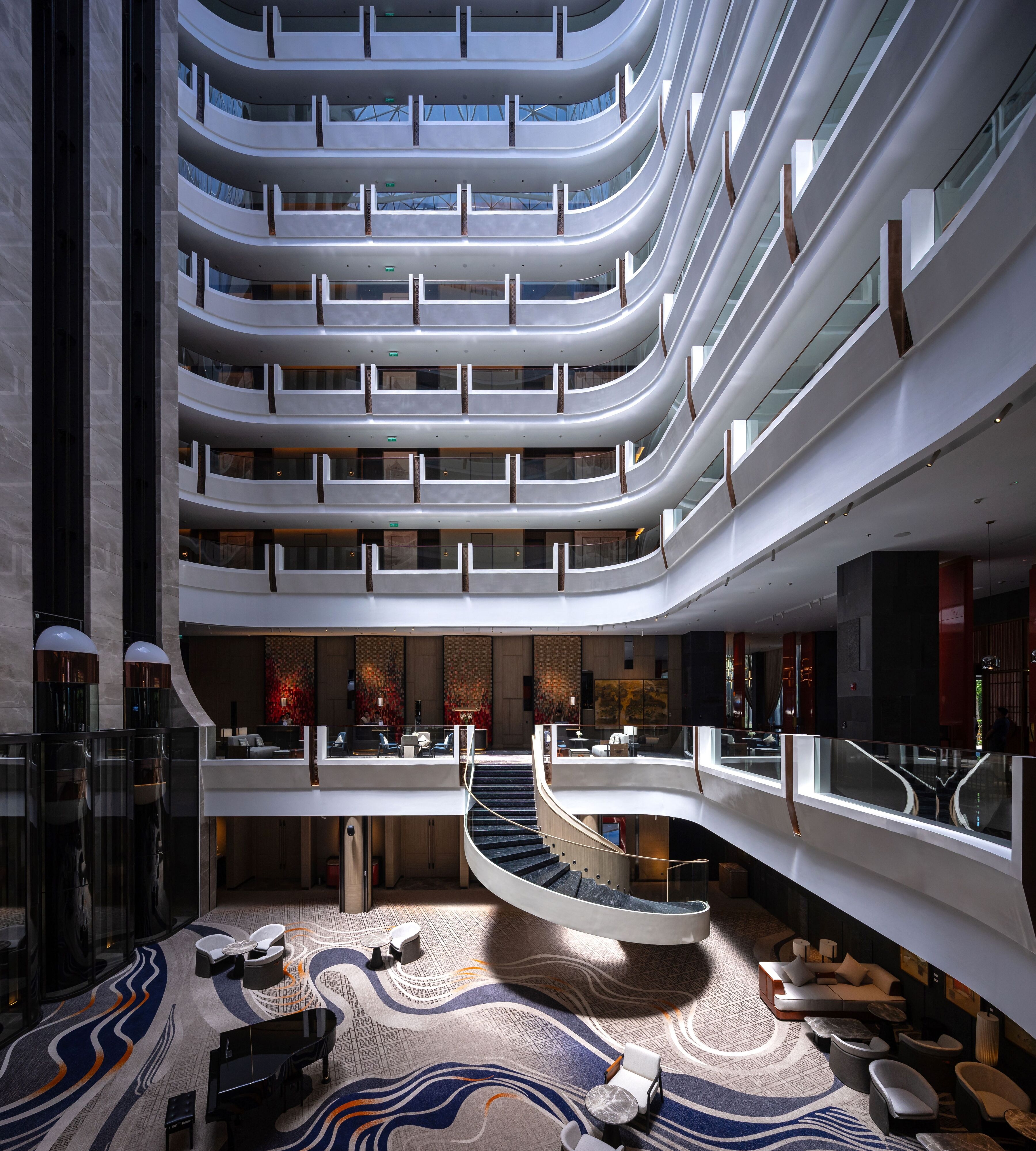
Inspired by this heritage, the hotel reinterprets traditional Vietnamese spatial principles, particularly the courtyard, as a vertical public realm. Conceived as an open, core-and-shell structure, the building engages its panoramic surroundings while creating a layered journey of light, shadow, and social connection. The result is not merely a place to stay, but a contemporary architectural landscape—where history, nature, and daily life converge.

