
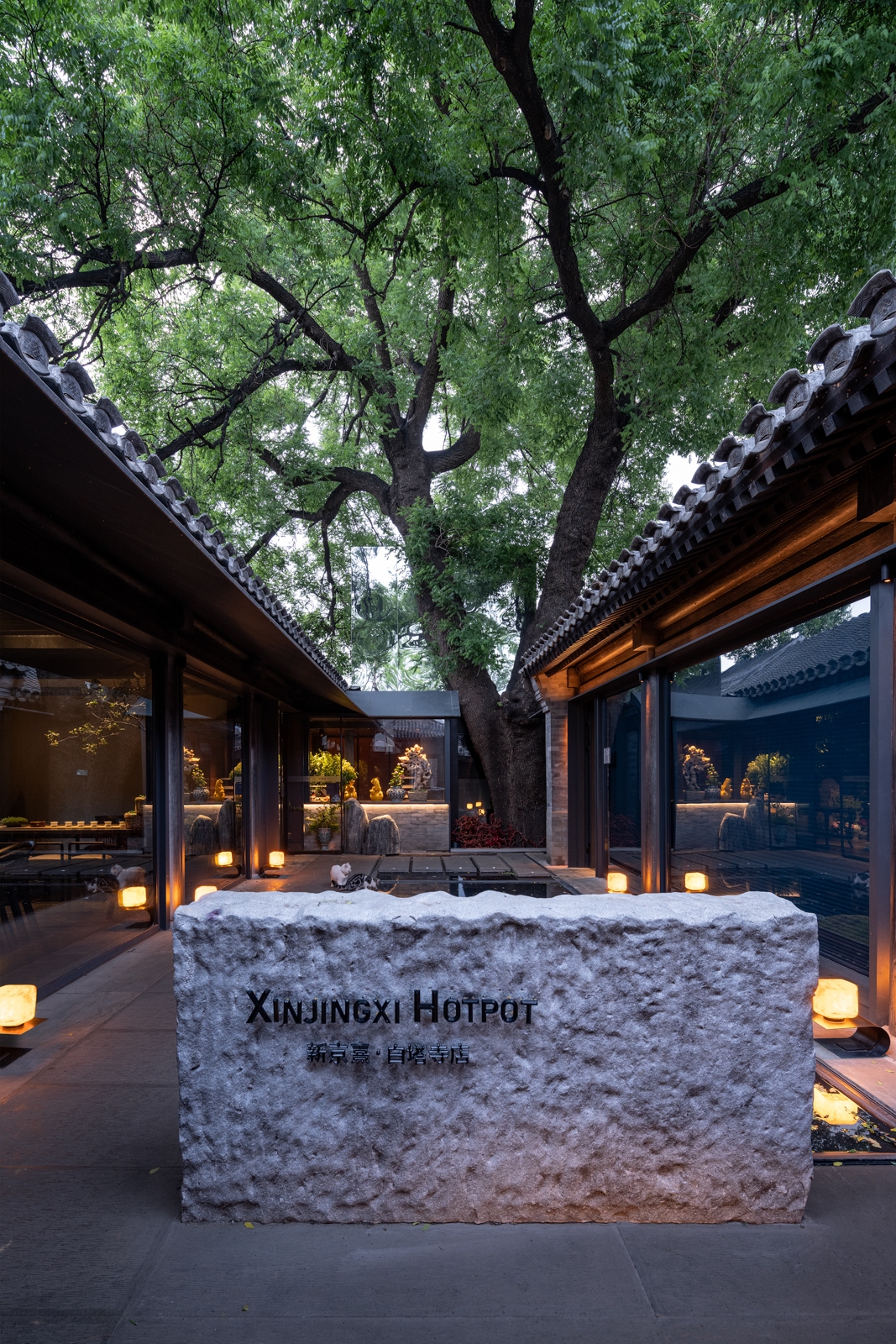
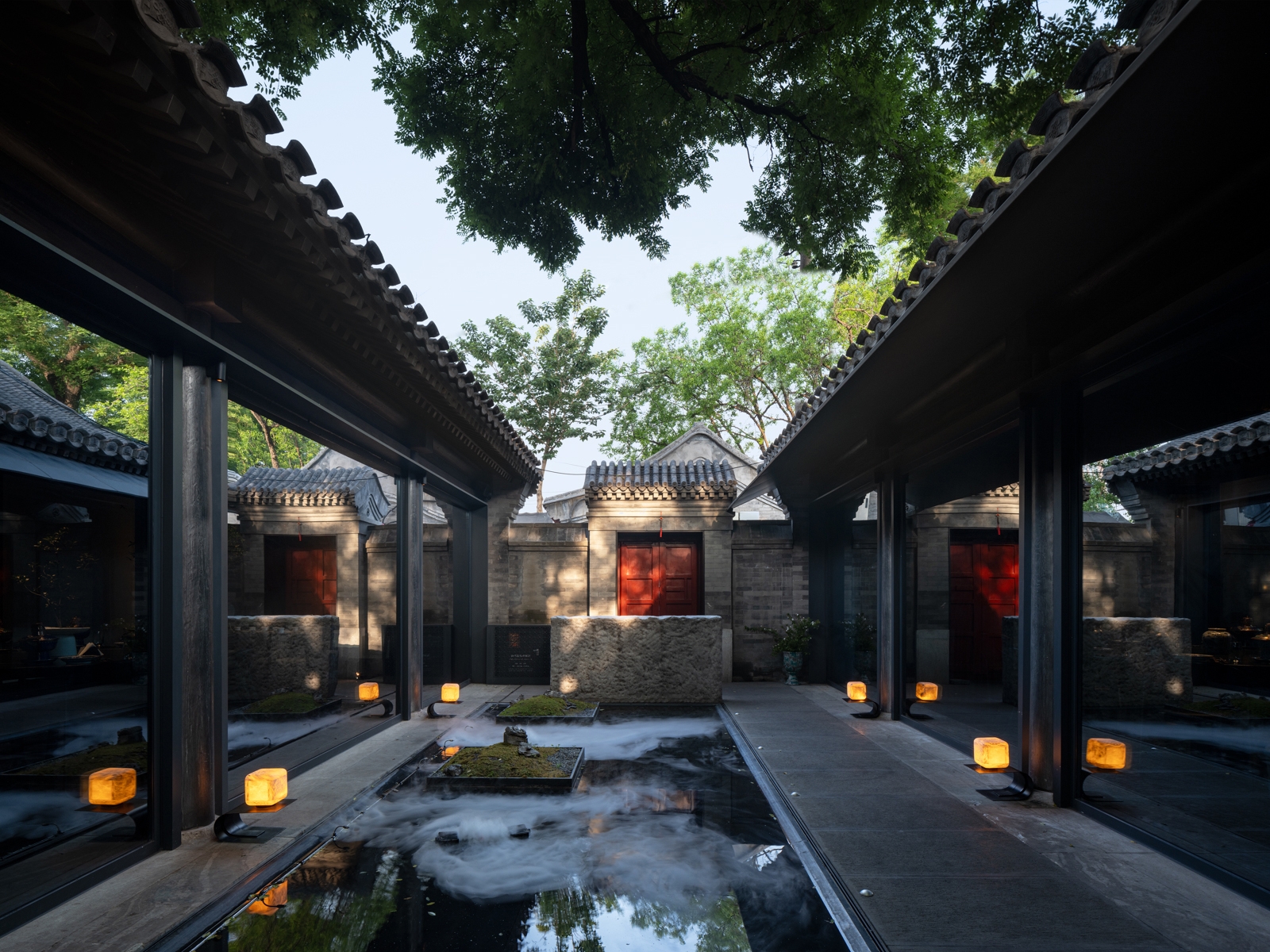
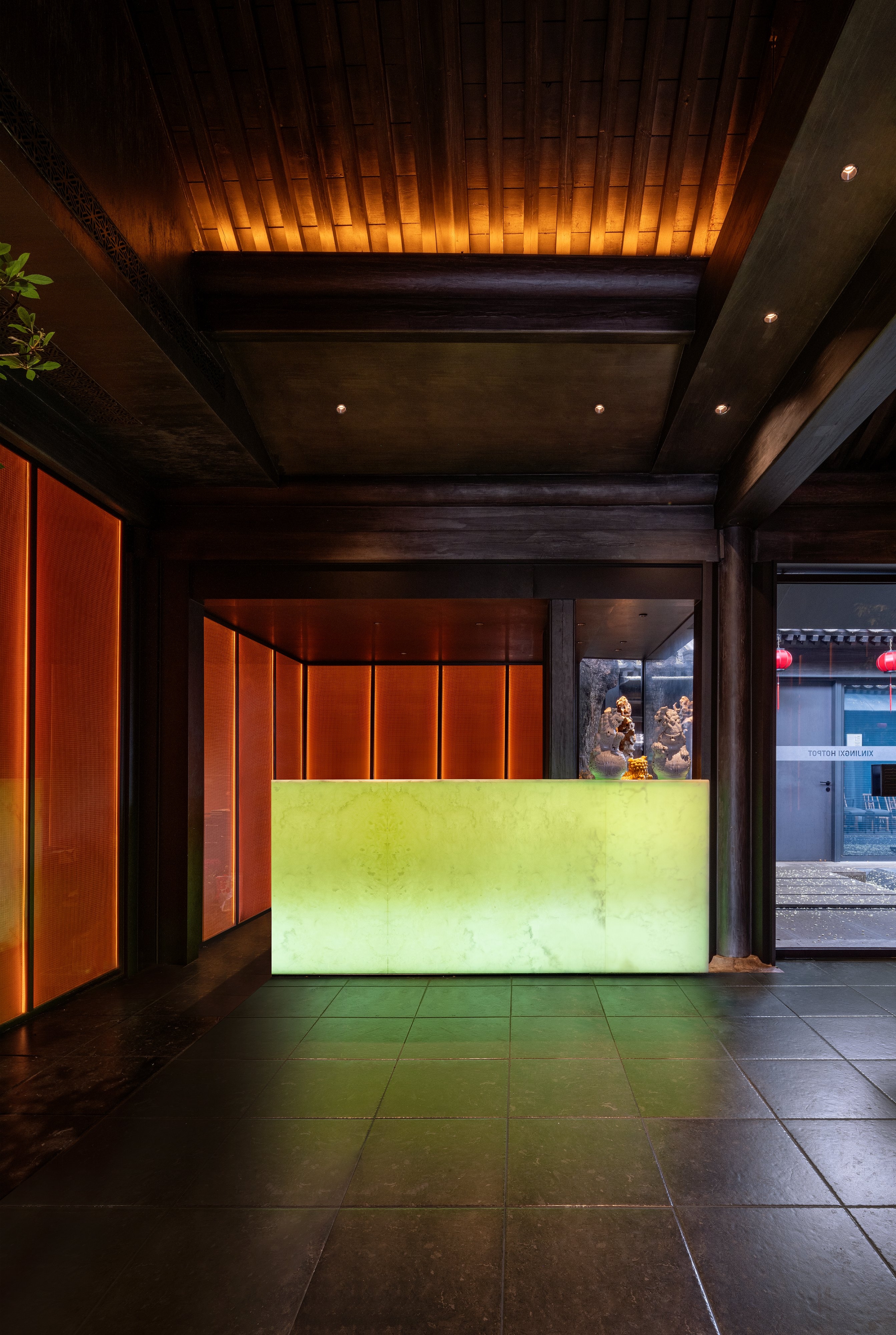
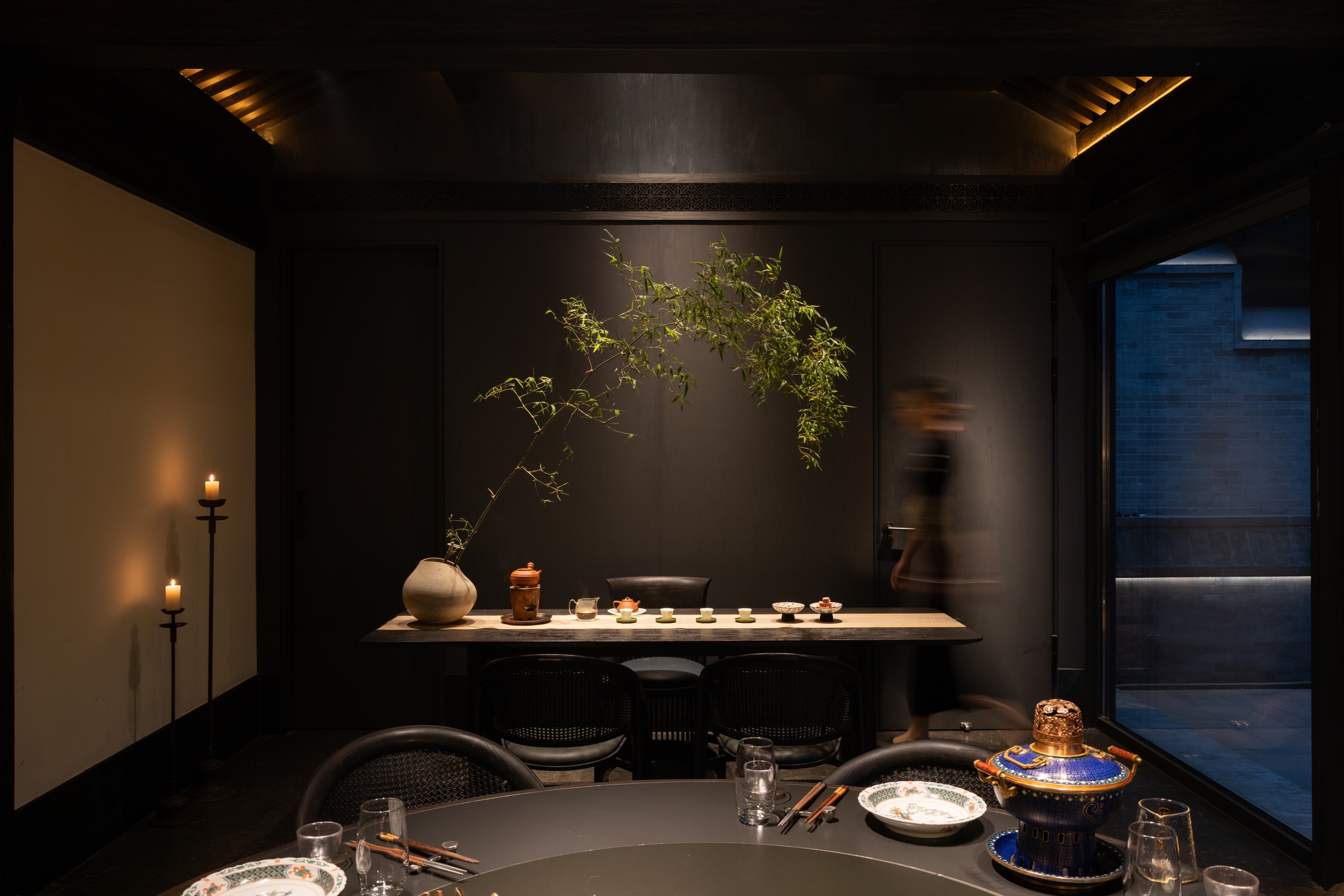
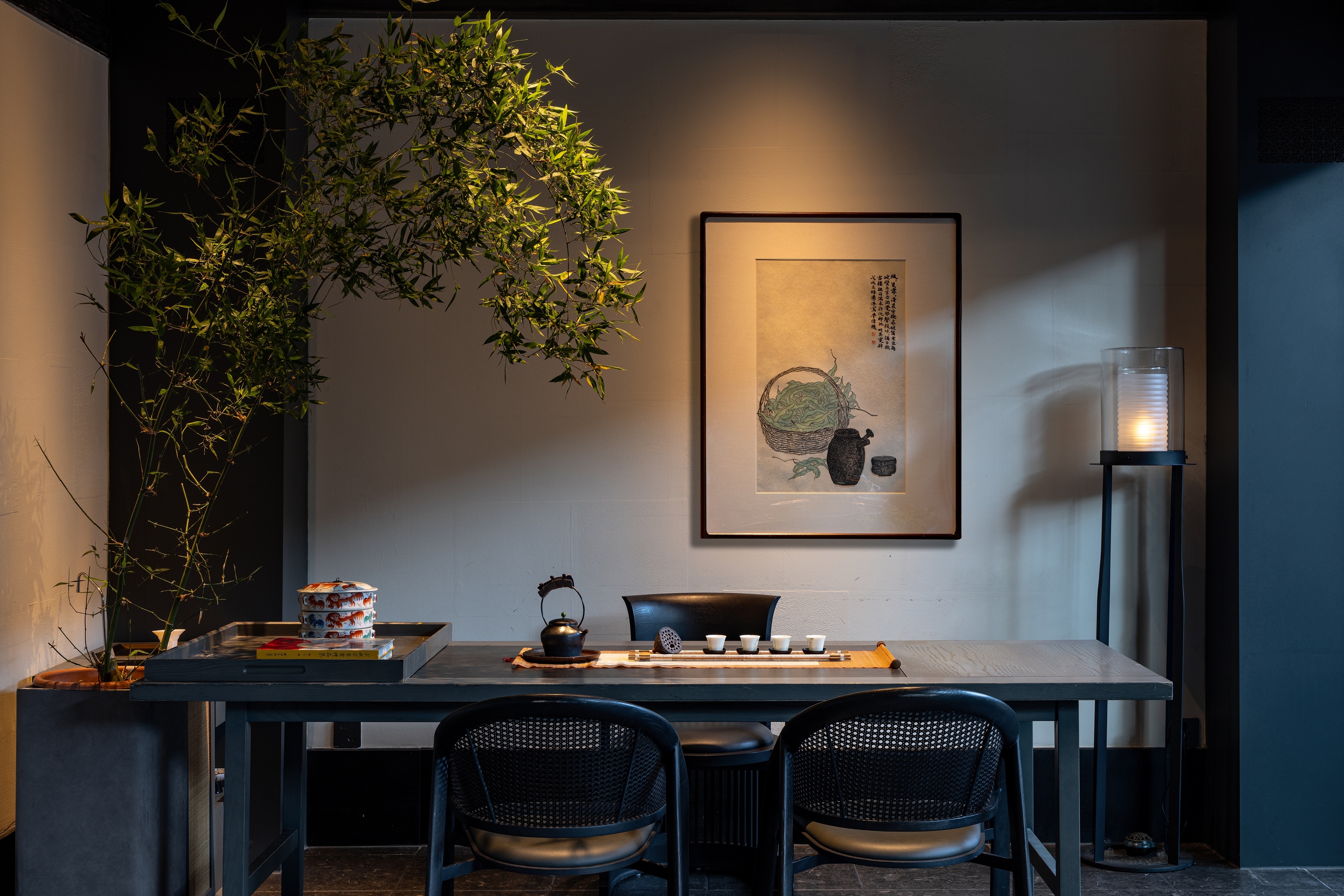
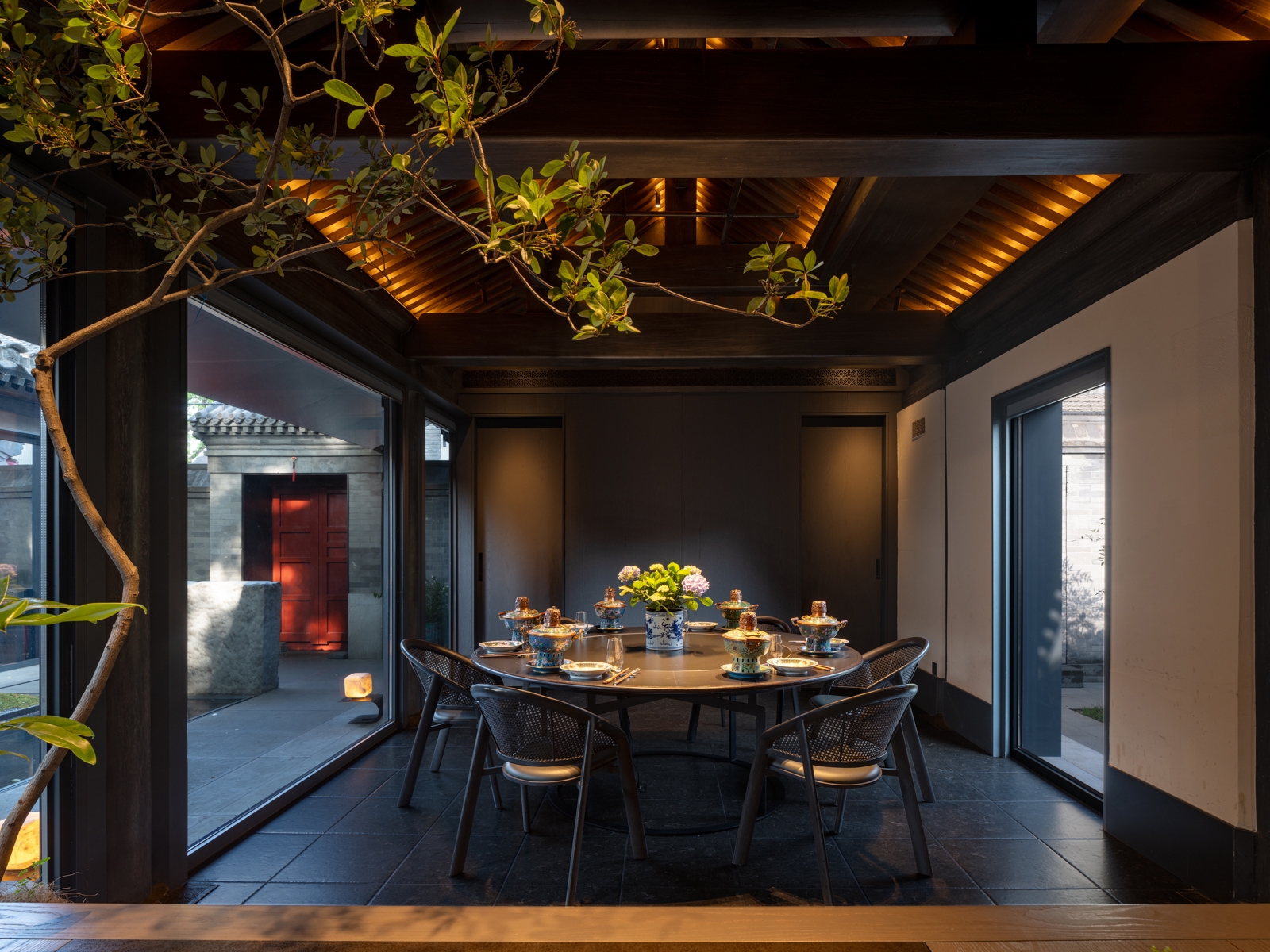
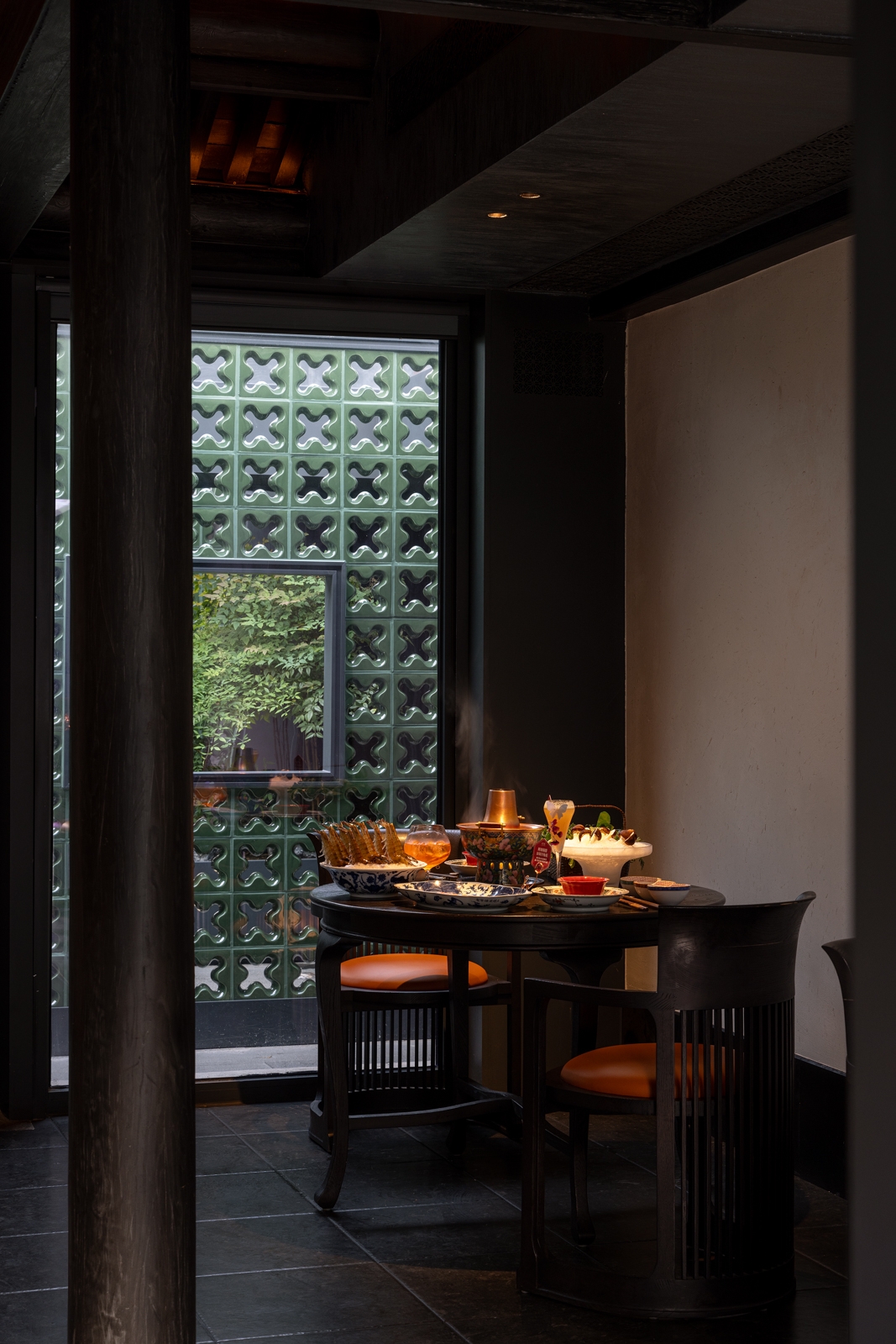
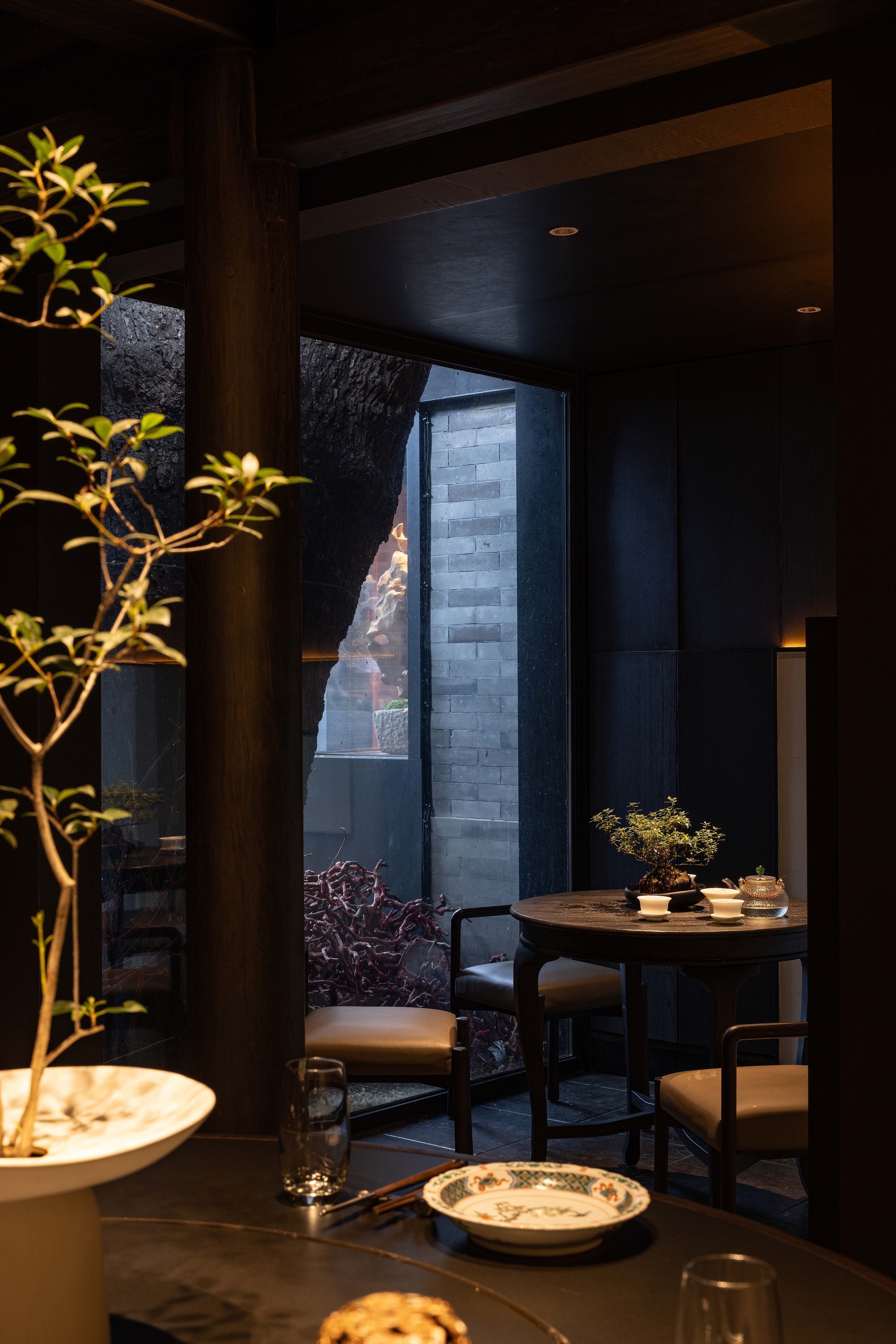
A traditional courtyard near the White Pagoda undergoes a subtle transformation. Guided by the principle of “reorganizing functions without altering the layout,” the design forms a cohesive spatial narrative through concealment, guidance, observation, and movement.
Facing a bustling hutong, a modest vermilion door opens into a tranquil interior, transitioning visitors from urban chaos to calm.
The first courtyard features a water mirror reflecting a century-old tree, softened by mist. A glass “light box” blends traditional and contemporary materials, marking a subtle turning point in circulation.
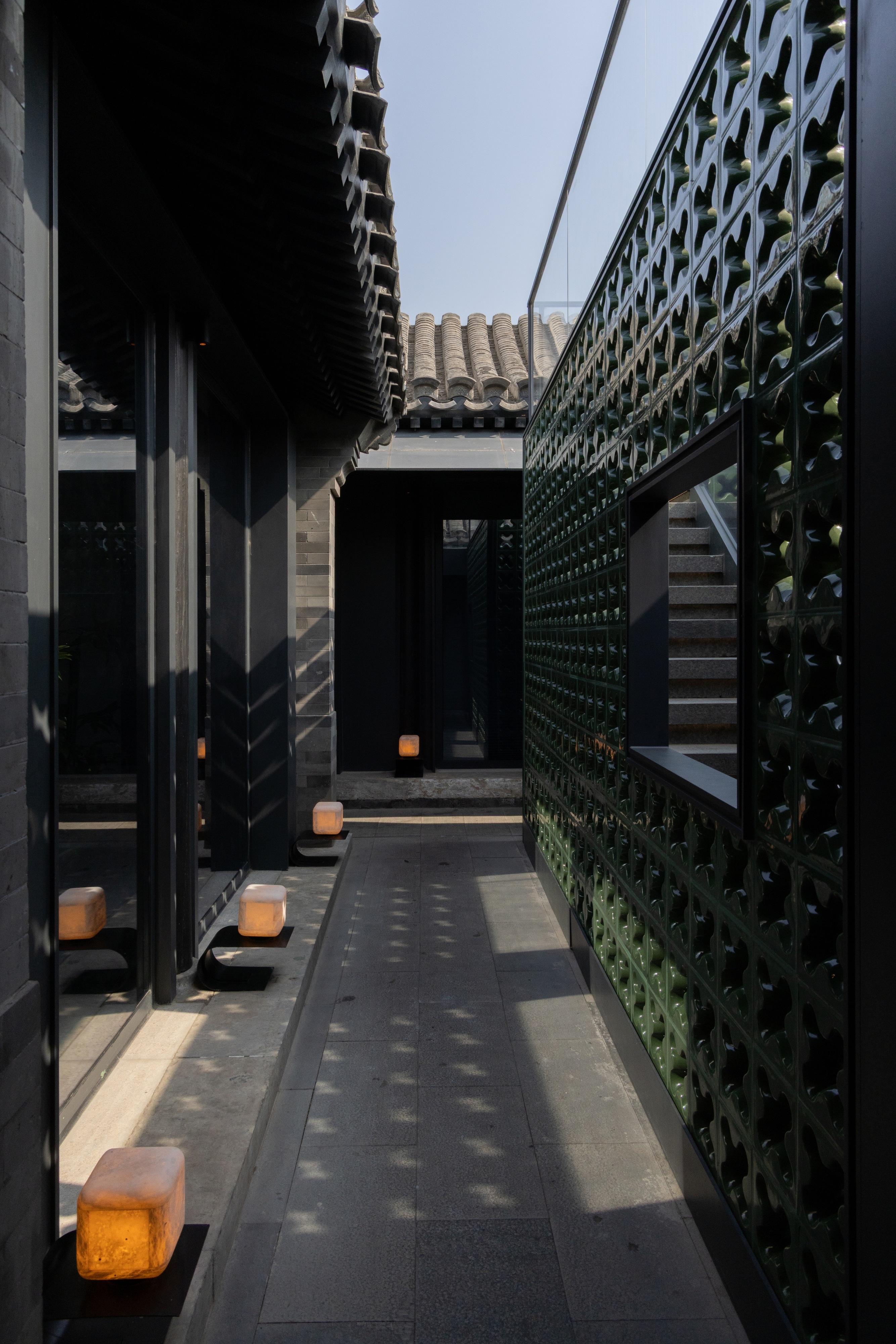
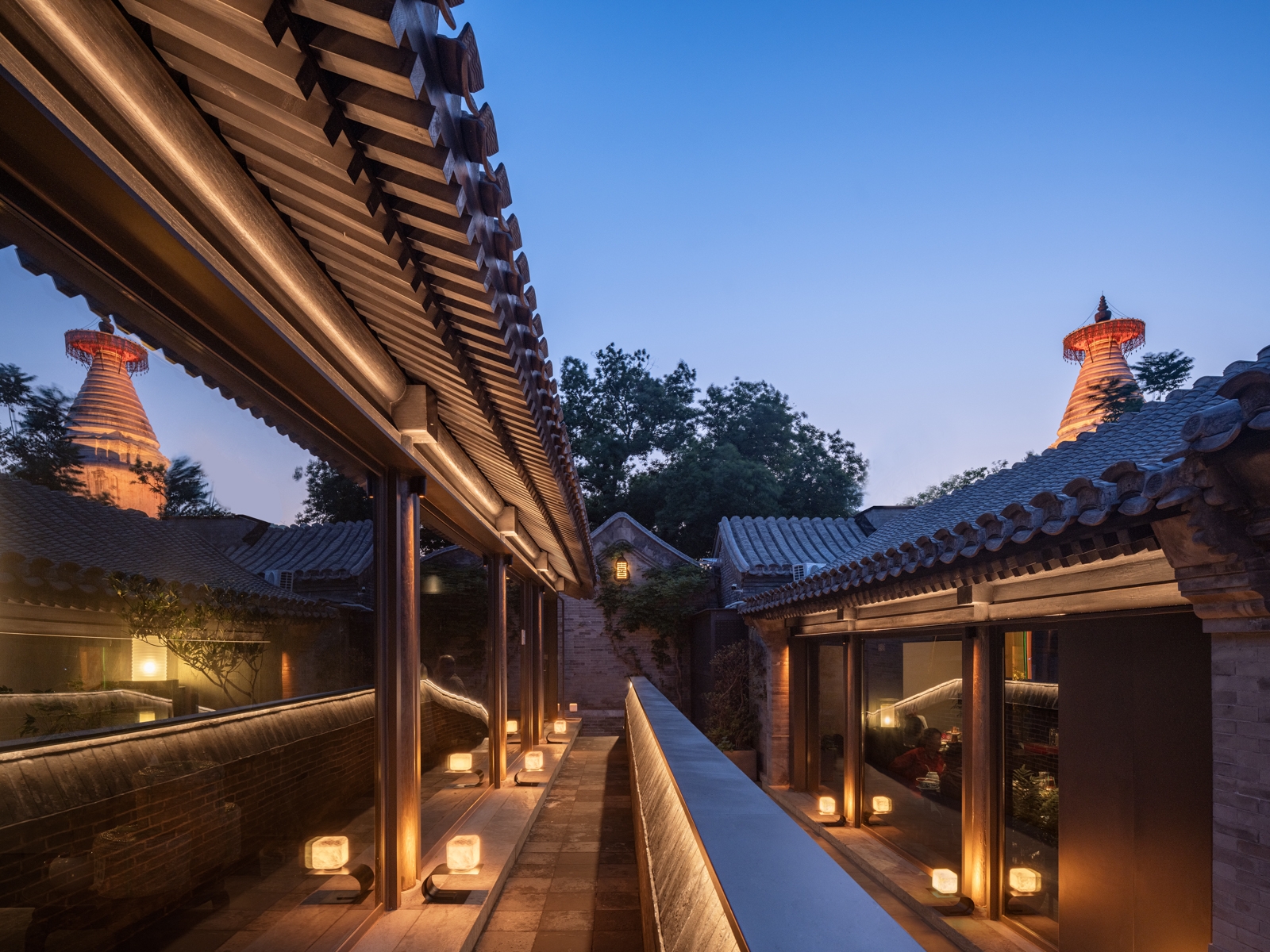
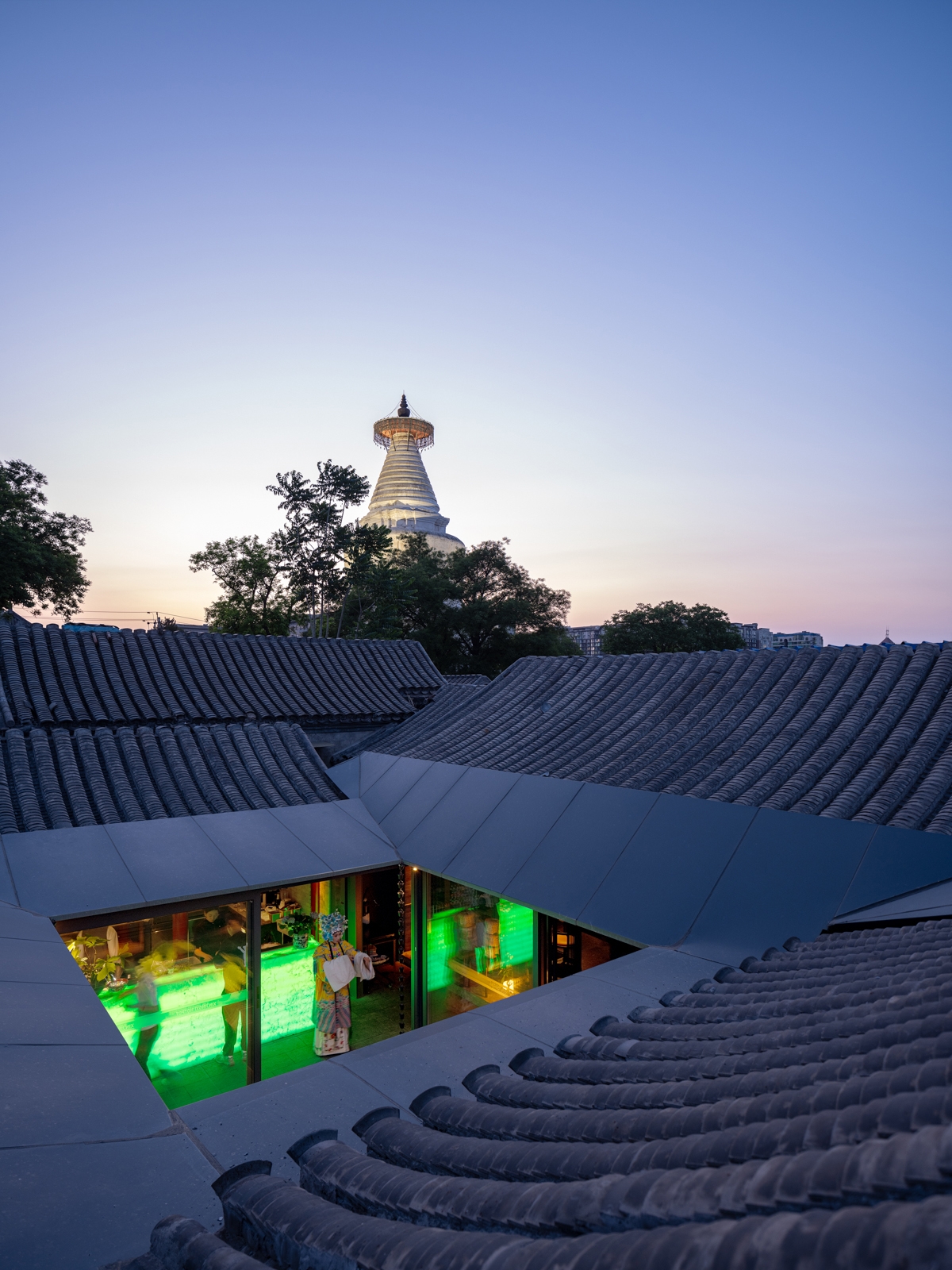
The second courtyard frames the White Pagoda as a living backdrop, while the third uses operable glass walls to dissolve boundaries, creating an immersive spatial experience. Green glazed bricks weave visual continuity throughout the sequence.
The rooftop terrace opens to the sky and landmark views, while the kitchen, tucked in the deepest courtyard, anchors the space in warmth and ritual, completing the narrative.
Green glass bricks connect the spatial sequence, demonstrating harmonious coexistence between tradition and modernity.
